
Holy Week and Pascha
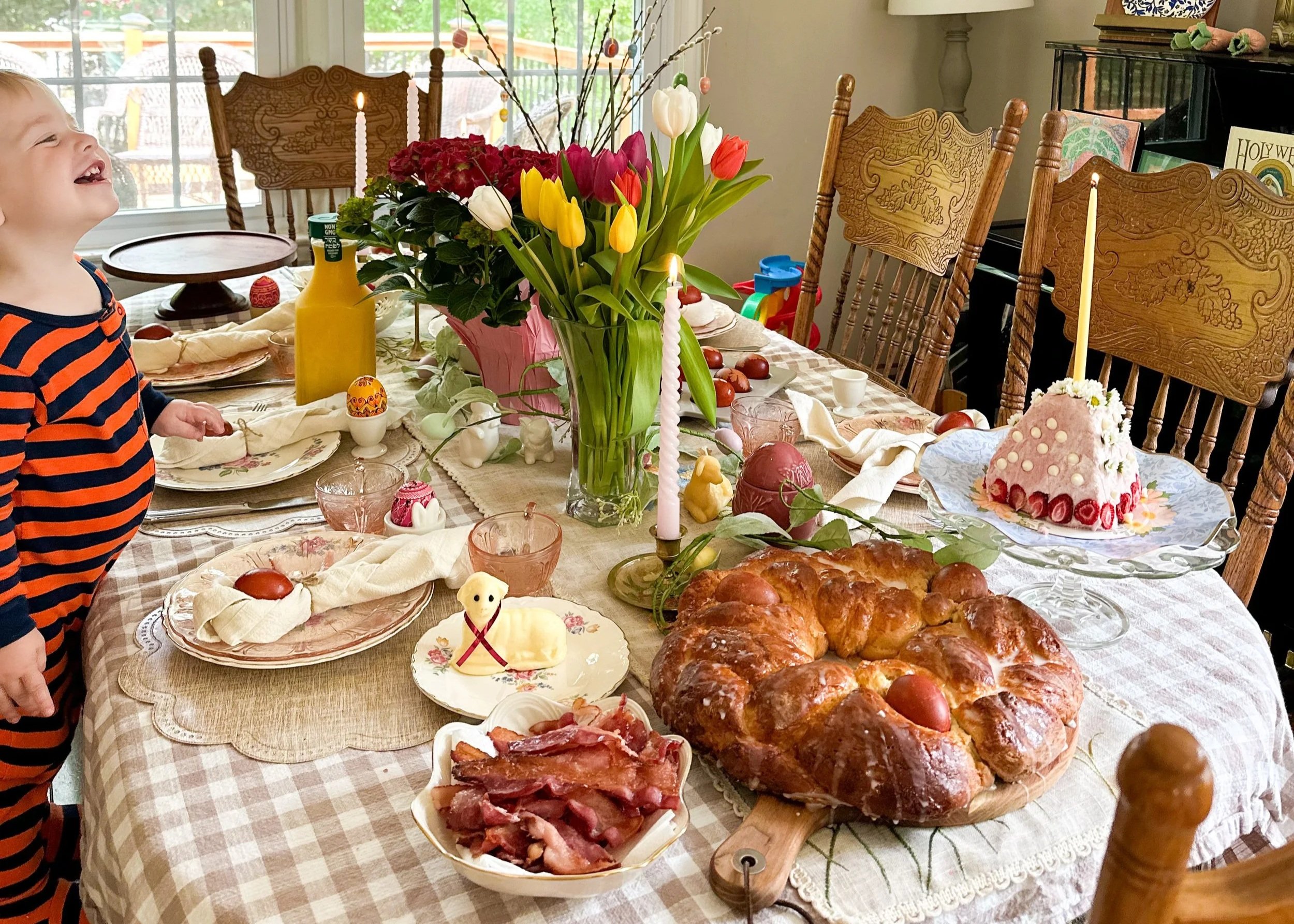
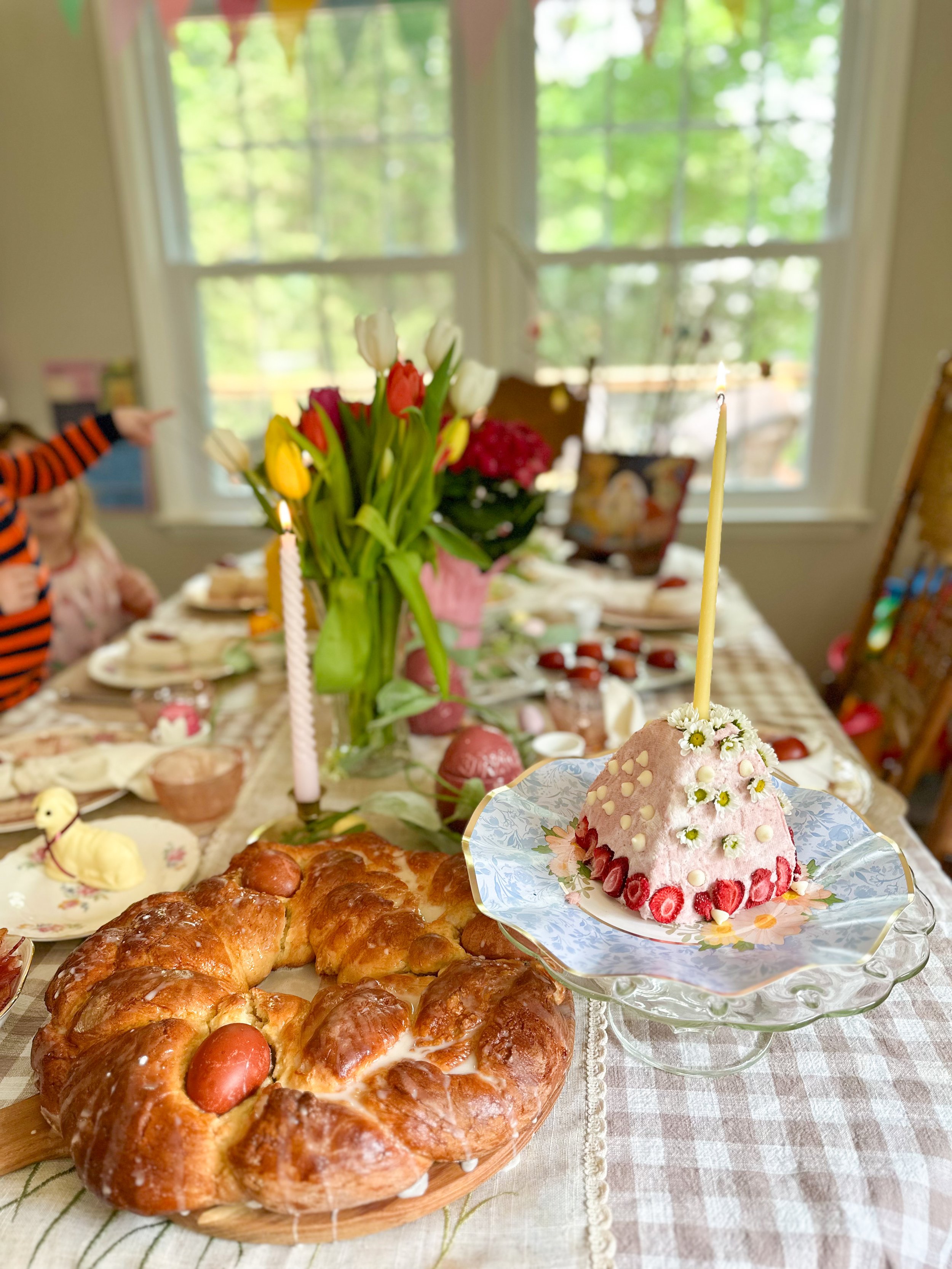
Rich and creamy, Pascha cheese is a beloved centerpiece of an Orthodox Paschal table. Traditionally made from farmer’s cheese (or variations like ricotta or cottage cheese), blended with butter, eggs, sugar, and cream—and sometimes studded with decorations—this sweet dish is molded into a pyramid shape and often adorned with the letters “XB,” meaning “Christ is Risen.” This recipe takes several days (at least 2) so it is good to prepare ahead of time to ensure you have enough time to allow the cheese mixture to drain and become a solid cheese.

If you’re new to creating a Pascha basket, welcome! I’m glad you found this little blogpost. My hope is to share an example of a Traditional Pascha basket, which stems from the Russian tradition, and share what each item symbolizes.

As Pascha draws near, I wanted to create a printable/planner to help you stay organized for Holy Week, prepare sufficiently for attending services, and have a smooth and grace-filled Holy Week and Pascha! A little foresight and planning before Holy Week begins goes a long way so we have a heart like Mary and we can focus on the one thing needful and not be a frazzled mess like Martha running around stressed!

The tradition of making Lazarakia—small, sweet buns shaped like Lazarus—is a beloved Greek tradition observed on Lazarus Saturday, the day before Holy Week. It commemorates the miracle of Jesus raising Lazarus from the dead, as described in the Gospel of John (John 11:1–44), which took place just before Christ’s Passion. These buns, also known as Lazarus Buns, are shaped to resemble Lazarus wrapped in grave clothes, with his arms crossed, just as he is depicted in icons. The eyes are typically made from cloves or chocolate chips. Made with a lightly sweet, vegan dough, Lazarakia are a Lenten fasting food, and the tradition of baking them—especially with children—has become a cherished practice not only in Greece but among Orthodox Christian communities around the world.
In this blog post, I’ll share the recipe I use, how this feast is celebrated throughout the world, tips for baking with children, the meaning behind this tradition including the story, book recommendations, additional resources and how we celebrate this meaningful day as a community.

One of my favorite parts of Holy Week preparation is dyeing red eggs which is an important tradition in the Orthodox Church. Some of the memories I carry with me each year: the warmth of the kitchen, my children’s delightful squeals as they watch the eggs turn a bright, vibrant red, and the joy we feel a we shine the eggs. Each time we make them, I am in awe of the little miracle of transforming white eggs to a bright red using onion skins. But did you know these red eggs hold meaning—they symbolize the blood of Christ, His resurrection, and the joy of new life? In this blogpost, I want to share not only how we dye our eggs using natural ingredients, but explain why this tradition means so much to me and to so many Orthodox families around the world.
Over the past few months, I have been collaborating with Patristic Nectar Kids to create feast day videos for Orthodox Families. So far we have created 10 Episodes! You can see direct links to these episodes below!
Be sure to follow @PatristicNectarKids and text “PNP” to 53-555 to become a regular donor and get access to behind-the-scenes emails from the PNP team!
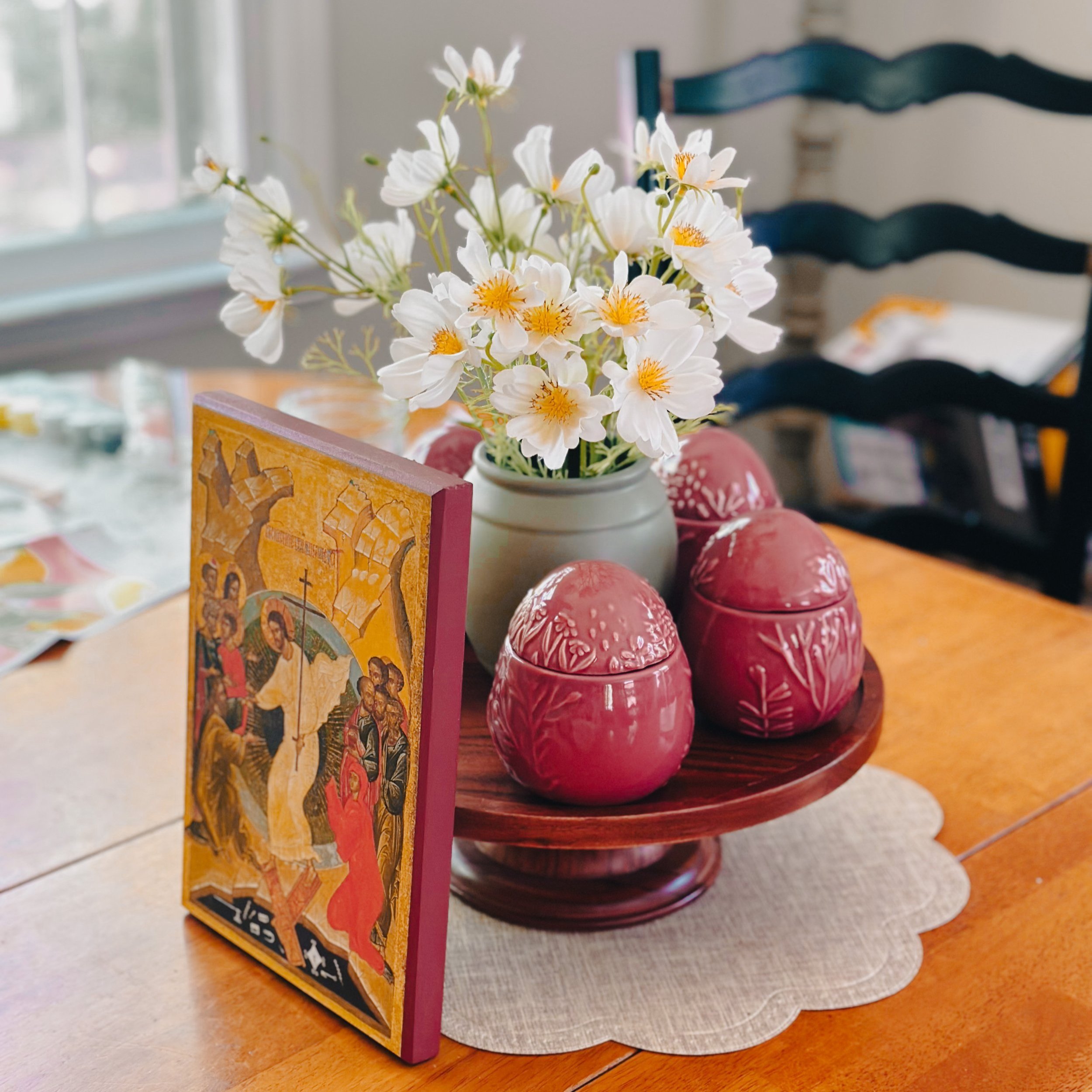
During the Paschal season, just like we do during lent, consider making changes to your environment that echo what is going on liturgically…

I compiled a few items in my Amazon storefront that can help you prepare your Pascha baskets! Feel free to shop my links, and know that I get a small commission if you do use them, so I appreciate that so very much!
As Pascha draws near, I wanted to create a printable/planner to help you stay organized for Holy Week, prepare sufficiently for attending services, and have a smooth and grace-filled Holy Week and Pascha! A little foresight and planning before Holy Week begins goes a long way so we have a heart like Mary and we can focus on the one thing needful and not be a frazzled mess like Martha running around stressed!

In this guide you will find many resources and information for each day of Holy Week to help guide your family through the Passion of our Lord. I’ve included activity suggestions (for the ambitious ones), book recommendations, as well as tips to help you prepare for Pascha so this Holy Week will be much smoother than in years past and you can experience the Joy of Pascha!

There are a plethora of wonderful books on the market today for children to better understand our Orthodox Faith. Every year at Pascha, we gift our children a new book to add to our collection - usually surrounding the theme of the season. These are the ones we have read and loved! I’ve also added the age range that I think is appropriate to introduce it, but of course most of these books can be read aloud on the laps of mom and dad and would be perfectly suited for the whole family.
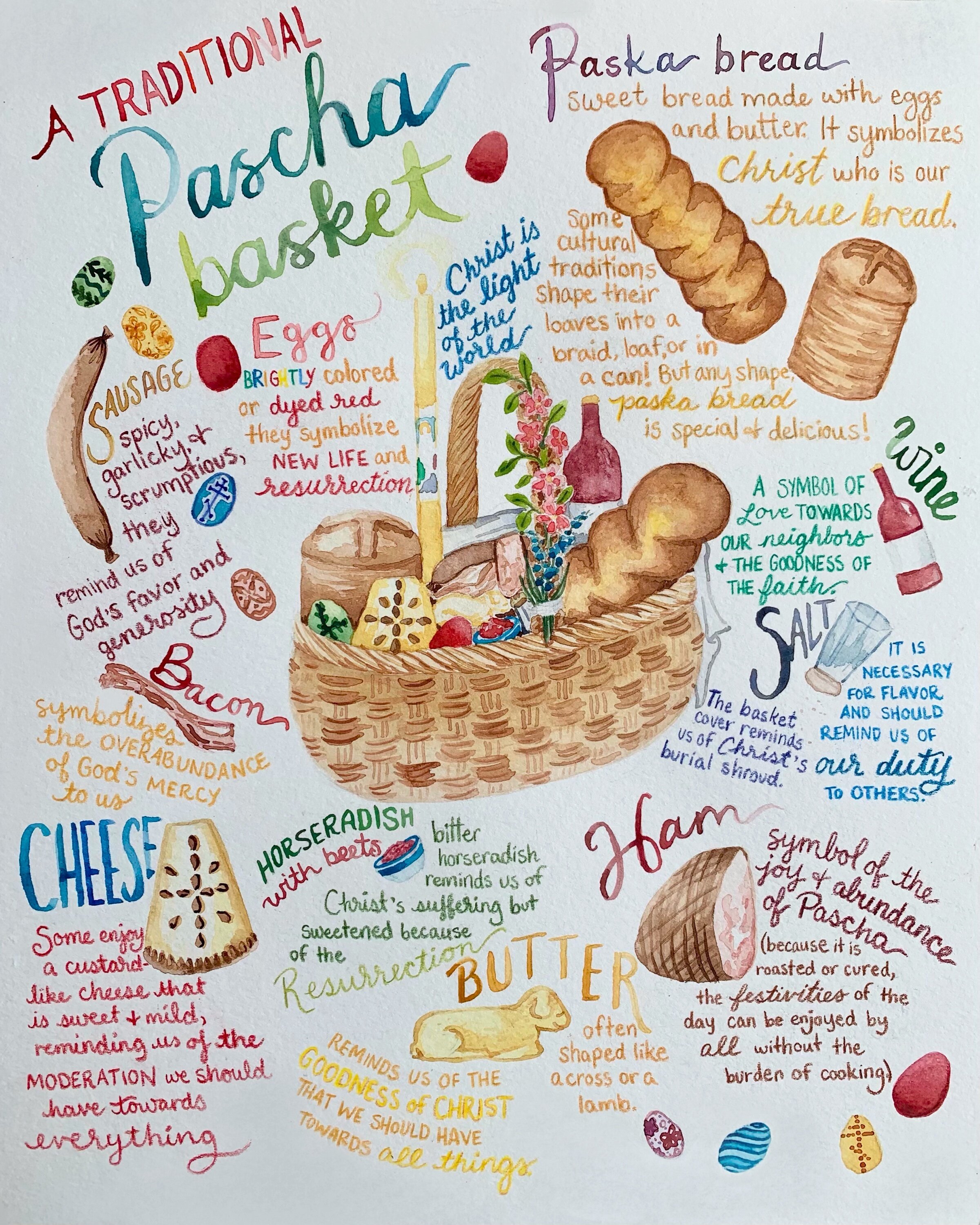
If you’re new to creating a Pascha basket, welcome! I’m glad you found this little blogpost. My hope is to share an example of a Traditional Pascha basket, which stems from the Russian tradition, and share what each item symbolizes.
During the Paschal season, just like we do during lent, consider making changes to your environment that echo what is going on liturgically…

Start off the new month with an intentional plan to incorporate the liturgical life into your home, with a few simple additions. The Liturgical calendar can be very full, so by pairing it down to, this printable has ONE saint, ONE hymn, ONE activity, and ONE family culture building activity.


In this guide you will find many resources and information for each day of Holy Week to help guide your family through the Passion of our Lord. I’ve included activity suggestions (for the ambitious ones), book recommendations, as well as tips to help you prepare for Pascha so this Holy Week will be much smoother than in years past and you can experience the Joy of Pascha!
