Food Traditions
Here you will find a collection of feast day recipes and traditions featured on my blog:
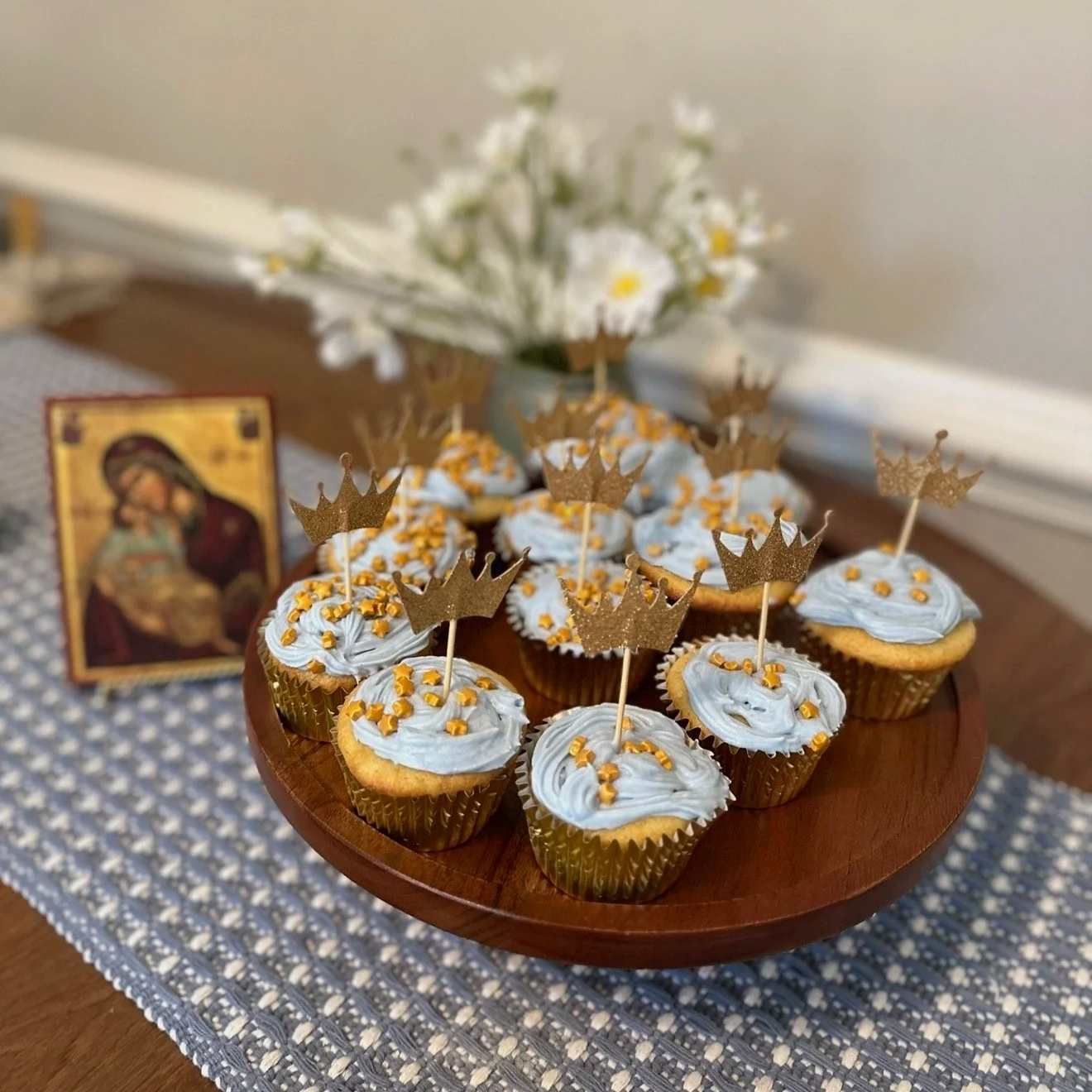
For the feast of the Nativity of the Theotokos, make Queen of Heaven cupcakes! A fun way to help children remember this feast is by celebrating the Theotokos' “birthday” with cupcakes! Adorned with blue frosting, the liturgical color for her feast, and add some star sprinkles or cupcake toppers. It is said that her womb was more "spacious than the heavens."
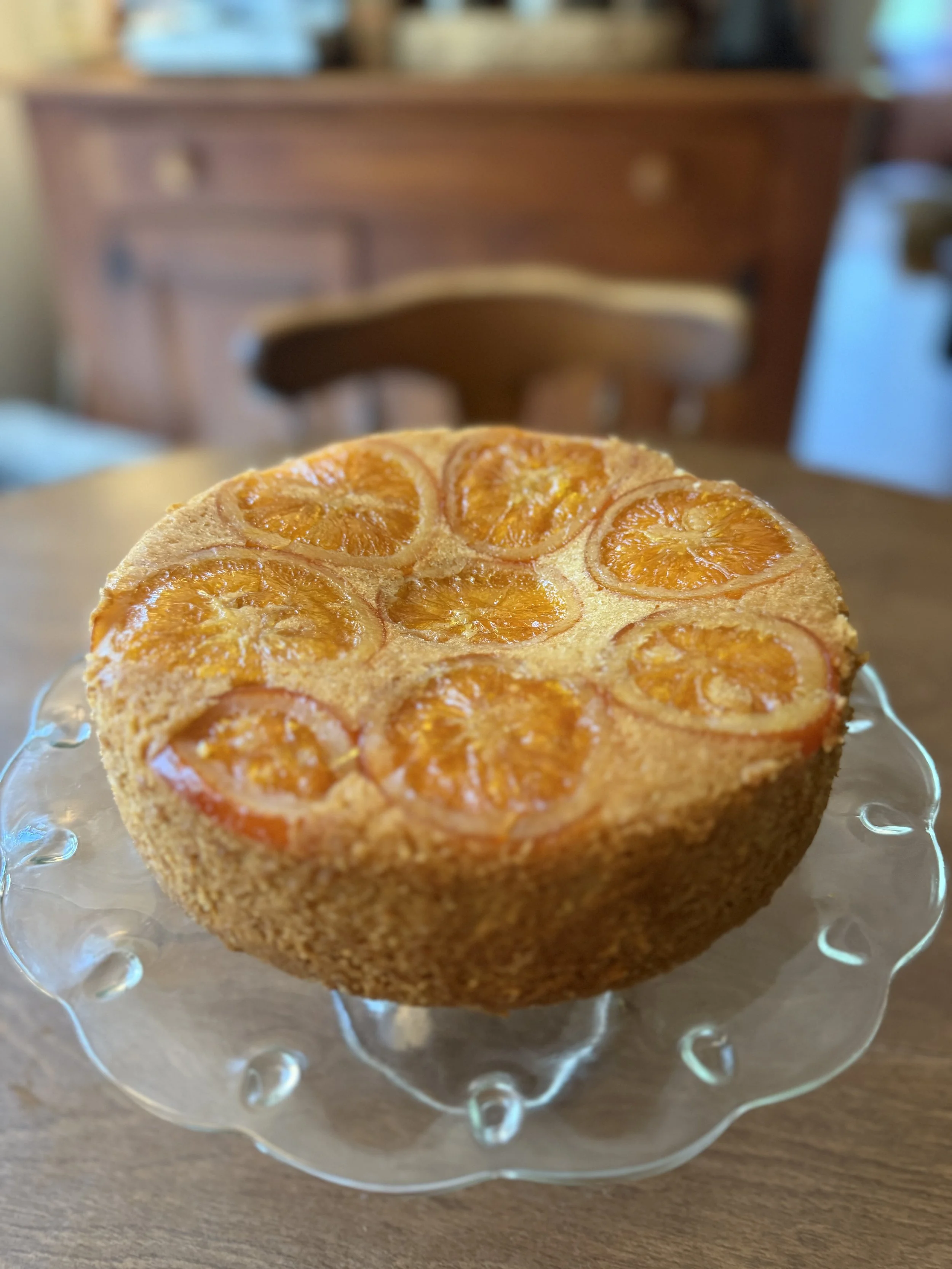
Phanouropita (or fanouropita) is a traditional Orthodox cake with a beautiful story behind it. Orthodox Christians often pray to St. Phanourios, the patron saint of lost things, when we’ve misplaced something. We ask for his intercession, and when the lost item is found, it is customary to bake phanouropita, bring it to church to be blessed by the priest, and then share it with the parish community.
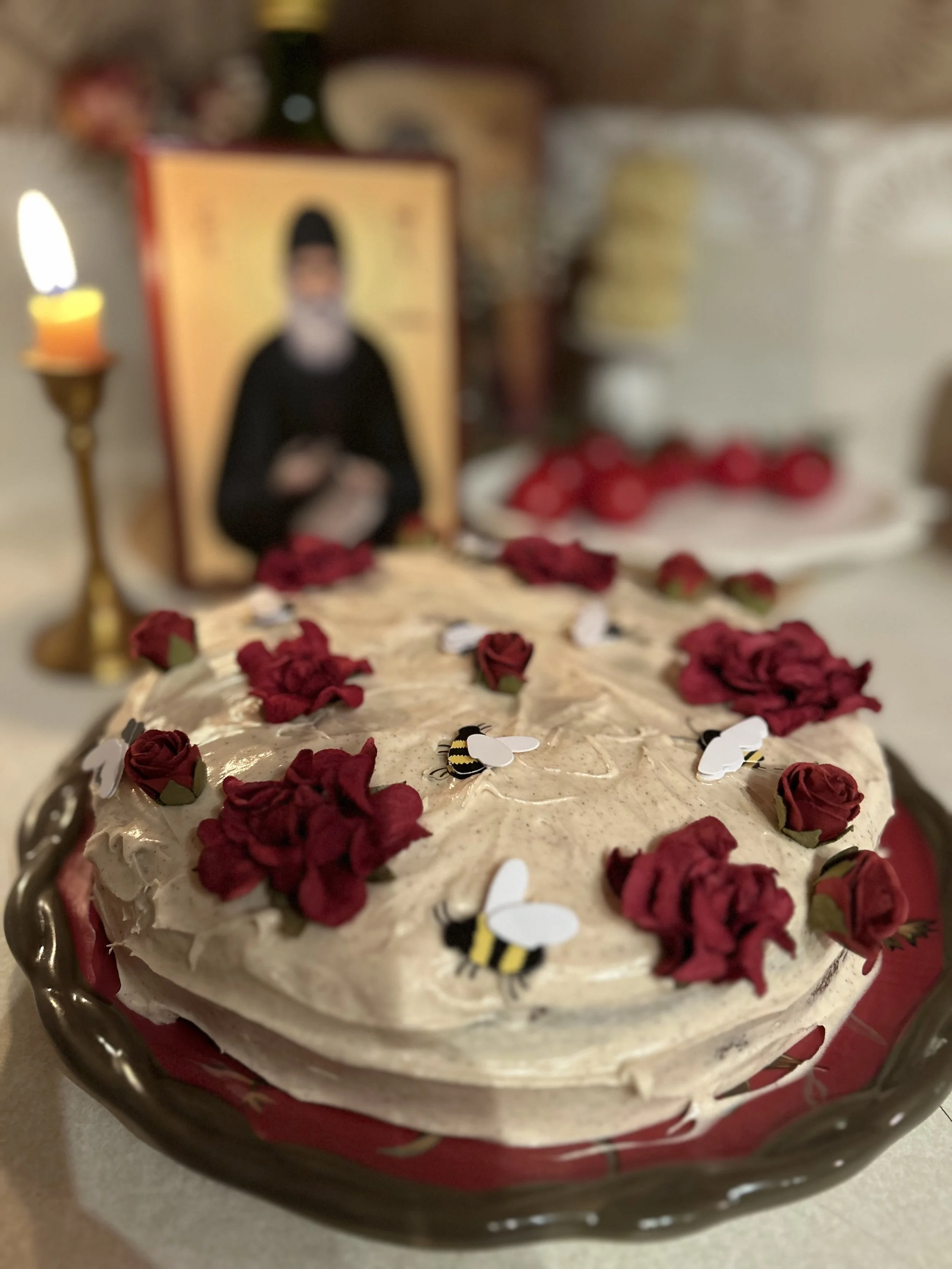
This post shares a simple, meaningful honey-spiced cake recipe called “Be the Bee,” inspired by St. Paisios and designed to bring Orthodox tradition into the home through a memorable, family-centered feast day celebration.

Here you’ll find 10 fun ways to celebrate Ascension as a family in hopes that one of these ideas will spark some ideas for you as you live out the Liturgical Calendar. Perhaps they will become your annual tradition for each Ascension! These are not just activities for activities sake, of course. My hope is that these will aid you in sharing more about our faith with your children in a way that is developmentally appropriate, allows for their exploration and participation in the feast, and hopefully cultivate a rich soil in their hearts that allows the seed of Truth that stays with them all the days of their life.
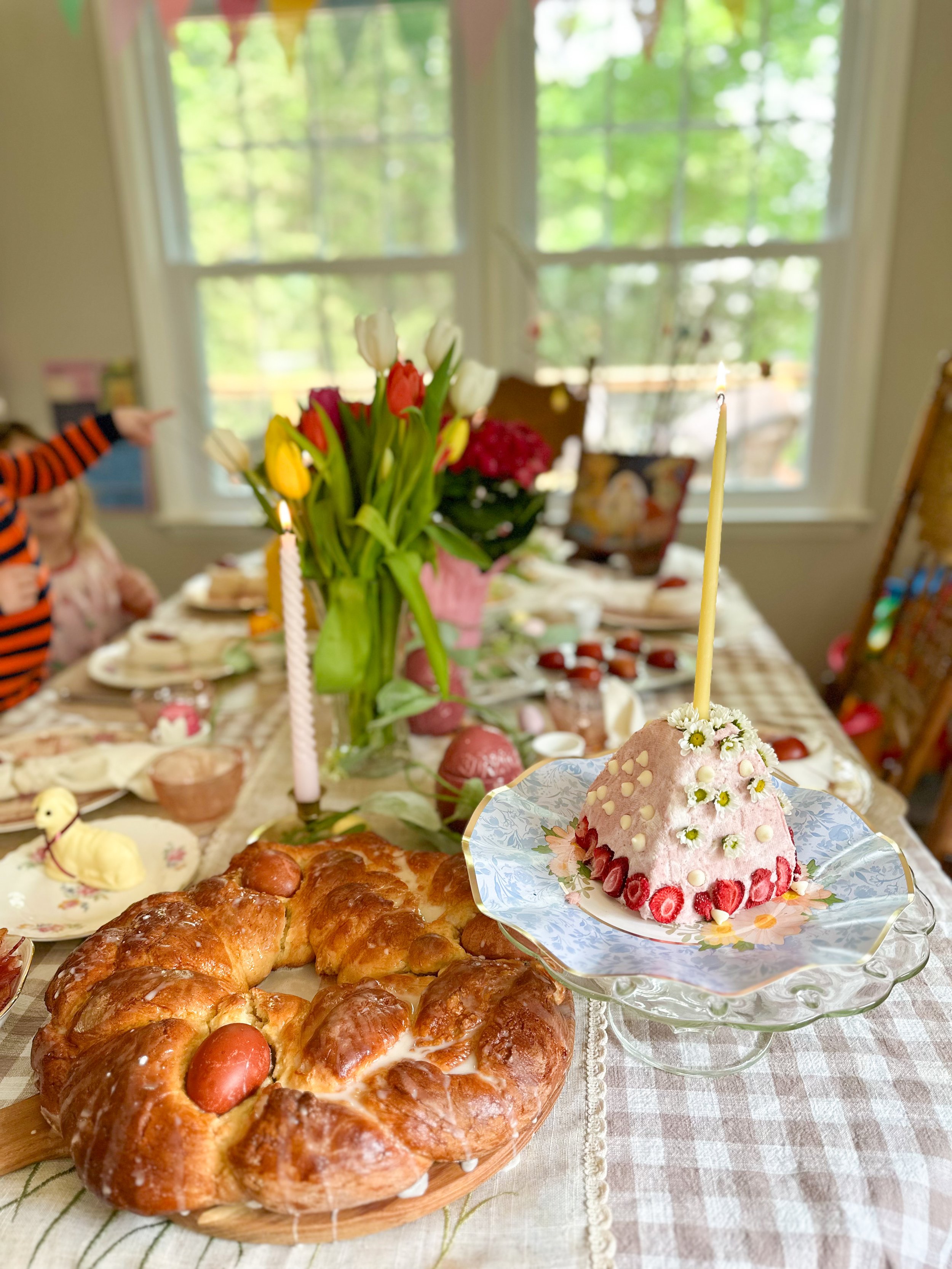
Rich and creamy, Pascha cheese is a beloved centerpiece of an Orthodox Paschal table. Traditionally made from farmer’s cheese (or variations like ricotta or cottage cheese), blended with butter, eggs, sugar, and cream—and sometimes studded with decorations—this sweet dish is molded into a pyramid shape and often adorned with the letters “XB,” meaning “Christ is Risen.” This recipe takes several days (at least 2) so it is good to prepare ahead of time to ensure you have enough time to allow the cheese mixture to drain and become a solid cheese.
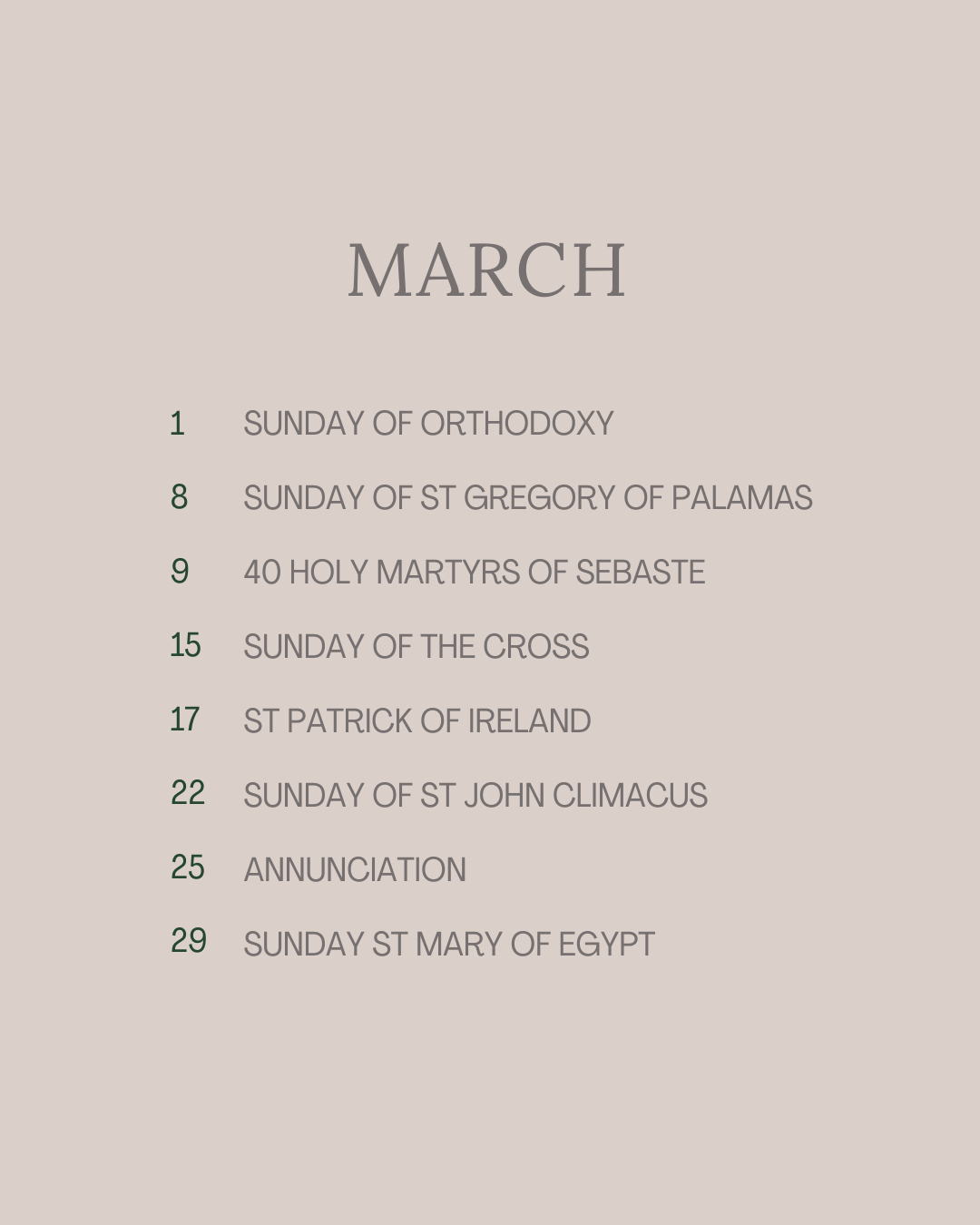
On this page, you’ll find a curated guide to March feast days in the Orthodox Church, with simple explanations, family-friendly ideas, book recommendations, and links to helpful Orthodox Christian resources.

If you’re new to creating a Pascha basket, welcome! I’m glad you found this little blogpost. My hope is to share an example of a Traditional Pascha basket, which stems from the Russian tradition, and share what each item symbolizes.

The tradition of making Lazarakia—small, sweet buns shaped like Lazarus—is a beloved Greek tradition observed on Lazarus Saturday, the day before Holy Week. It commemorates the miracle of Jesus raising Lazarus from the dead, as described in the Gospel of John (John 11:1–44), which took place just before Christ’s Passion. These buns, also known as Lazarus Buns, are shaped to resemble Lazarus wrapped in grave clothes, with his arms crossed, just as he is depicted in icons. The eyes are typically made from cloves or chocolate chips. Made with a lightly sweet, vegan dough, Lazarakia are a Lenten fasting food, and the tradition of baking them—especially with children—has become a cherished practice not only in Greece but among Orthodox Christian communities around the world.
In this blog post, I’ll share the recipe I use, how this feast is celebrated throughout the world, tips for baking with children, the meaning behind this tradition including the story, book recommendations, additional resources and how we celebrate this meaningful day as a community.

One of my favorite parts of Holy Week preparation is dyeing red eggs which is an important tradition in the Orthodox Church. Some of the memories I carry with me each year: the warmth of the kitchen, my children’s delightful squeals as they watch the eggs turn a bright, vibrant red, and the joy we feel a we shine the eggs. Each time we make them, I am in awe of the little miracle of transforming white eggs to a bright red using onion skins. But did you know these red eggs hold meaning—they symbolize the blood of Christ, His resurrection, and the joy of new life? In this blogpost, I want to share not only how we dye our eggs using natural ingredients, but explain why this tradition means so much to me and to so many Orthodox families around the world.

Koliva a traditional wheat berry dessert made in the Eastern Orthodox Church which is served as a memorial dish at funerals, memorial services which is symbolic of the the cycle of life, death, and resurrection. Just as Jesus taught in the Gospel of John: “Truly, truly, I say to you, unless a grain of wheat falls into the earth and dies, it remains alone; but if it dies, it bears much fruit.” The wheat berries symbolize the body of the departed loved one which is planted into the ground, and lies in wait and hope of the resurrection of the dead. Recipe and video tutorial included.

Have you ever heard of St Lucia of Syracuse? She was a young martyr who lived in the 4th century in Italy and is celebrated in many Scandinavian countries on her feast day, December 13th. Each year on her feast day, children dress up in all white, wear a crown of candles and bake St Lucia buns to share with their loved ones and friends. Many churches also host a St Lucia Procession where both boys and girls process while singing a hymn to St Lucia. She is a wonderful saint, especially for children to look to because of her acts of mercy to the poor and her boldness and bravery as she faced persecution and eventually martyrdom for the sake of Christ.
In this guide you will find more about the many Scandinavian traditions surrounding this feast, the story of her life and martyrdom, and additional resources to help you create feast day traditions with your families for years to come!

During the Nativity season, I love to embrace all things Christmas. But I especially love a good Feast Day theme that connects a Christmas activity to a saint! There are many traditions on the feast of St Barbara as she is a beloved saint celebrated throughout the world, but since she is considered the Patron Saint of Architects, builders, and stone masons, we chose to make our Gingerbread houses on her feast day to remember her story!

In this guide you’ll find simple and easy ideas to celebrate the the Feast of St Nicholas with your kids - emphasis on easy! Activity suggestions, book recommendations, and additional information so you can share his story so together you can grow to love him even more!

St Catherine of Alexandria is celebrated on November 25th in the Orthodox Church. She is a beloved saint known for her wisdom, courage, and unwavering faith. Patron saint of unmarried women, craftspeople who work with wheels (potters and spinners), philosophers, students, and those seeking knowledge, St Catherine’s day offers a beautiful opportunity to reflect on her legacy through tradition and food. In this post, we’ll share a special recipe inspired by her feast day—a dish that brings together rich history and flavors, perfect for honoring this remarkable saint with your family or community. Whether you’re hosting a celebration or simply seeking a meaningful connection, this recipe will be a cherished treat for years to come!

Did you know that Chrysostom means "golden mouth"? Check out this super easy feast day tradition of making the "golden mouth milk" for the feast of St John Chrysostom! Easy and healthy and one that you can pull together with items you probably already have on hand!

The beheading of St John the Baptist is a strict fasting day. His feast day is always observed with strict fasting, and in addition, many pious Orthodox Christians will not eat food from a flat plate, use a knife, or eat round food on this day. Why? It’s to help us remember the story of St John’s beheading, as his head was served on a platter and given to Herodias’ daughter, according to the Scriptures. By avoiding a knife, plate, and round things, we are avoiding serving anything that resembles a head on a platter. The challenge itself reminds us of the story, and since it’s a solemn feast, we fast on this day.

All of my favorite feast day traditions have some food-related theme to them. St Phanourios, or the baking of the phanouropita, is one of my absolute favotires and just so happens to feast day tradition that sparked my love for learning more about the cultural food traditions celebrated throughout the world! This year, we had the joy of serving phanouropita for coffee hour!
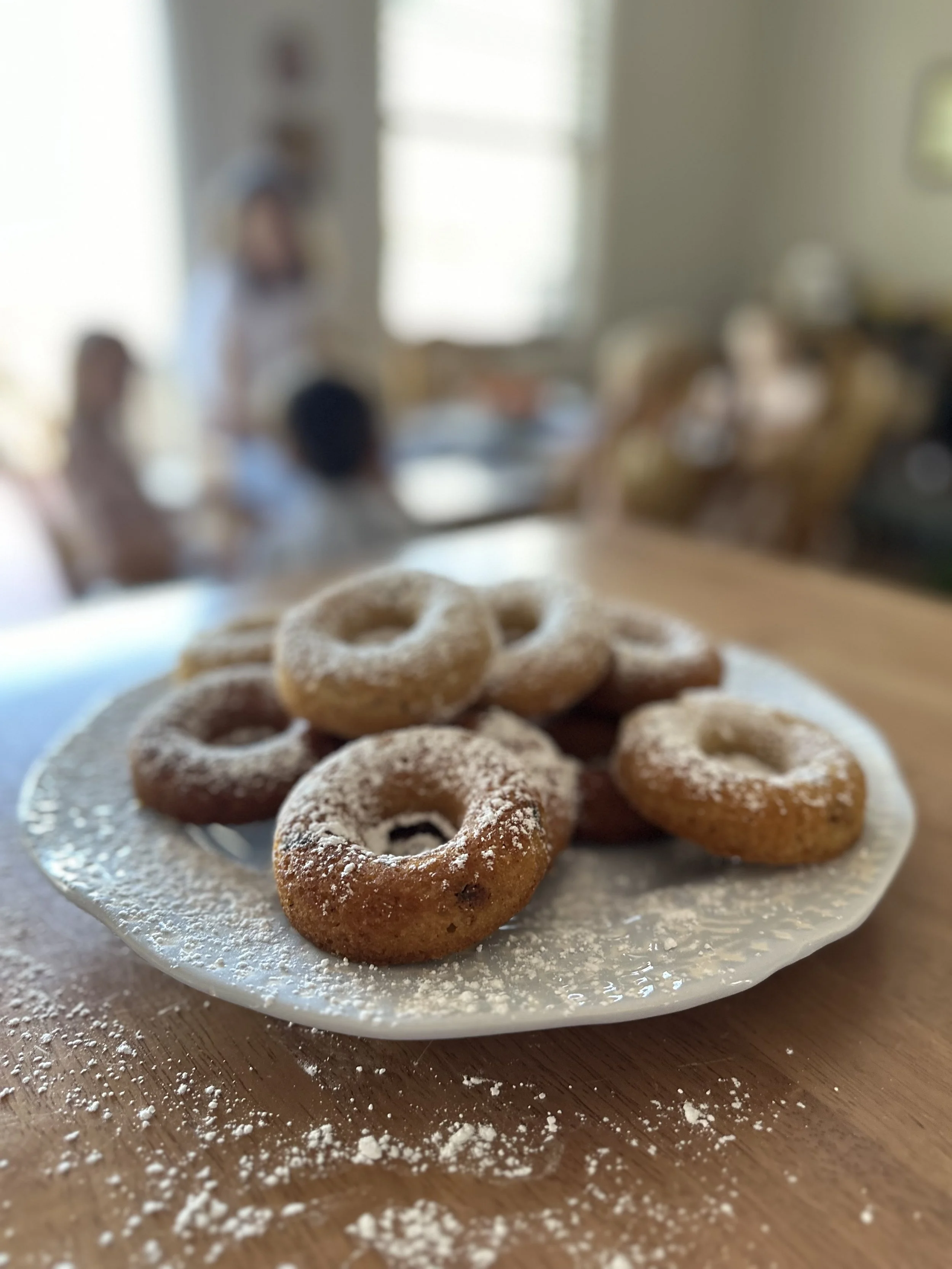
Have you ever heard of St. Phanourios, the patron saint of lost things? St Phanourios is known in the Orthodox Church as a saint who helps people find lost or stolen items. We can ask the Saints for help! We ask St. Phanourios to help us find whatever we lost, and when we find it, we bake a cake and share it with friends and loved ones as a way of giving thanks. This special tradition comes from Greece and the special olive oil citrus cake is called “Phanouropita!” In this blogpost, I am sharing the recipe for a simple baked phanouropita donut, which is ideal for sharing with others, an important element in the tradition!

St Phanourios is considered the patron saint of lost things. In this guide you’ll find simple and easy ideas to celebrate the feast of St Phanourios with your kids - including feast day traditions, activity suggestions, book recommendations, and additional information so you can share his story so together you can grow to love him even more!

Here you’ll find 10 easy ideas to celebrate Pentecost as a family. As a busy mom with 3 little ones, I know how precious your time is, so I hope to simplify how you celebrate feasts together. In this list you’ll find ways to prepare your kids for Pentecost (i.e. kneeling prayers, song, etc) and you will find fun recipes and stories too.

Here’s a simple and fun activity for you to do this weekend as a family as you live Liturgically. Make “mud” brownies! I am always a fan of incorporating food into any feast day, especially for children! In addition to it being obviously yummy, it’s also a great sensory experience to help kids connect the healing element (mud) that Jesus used to heal the blind man!
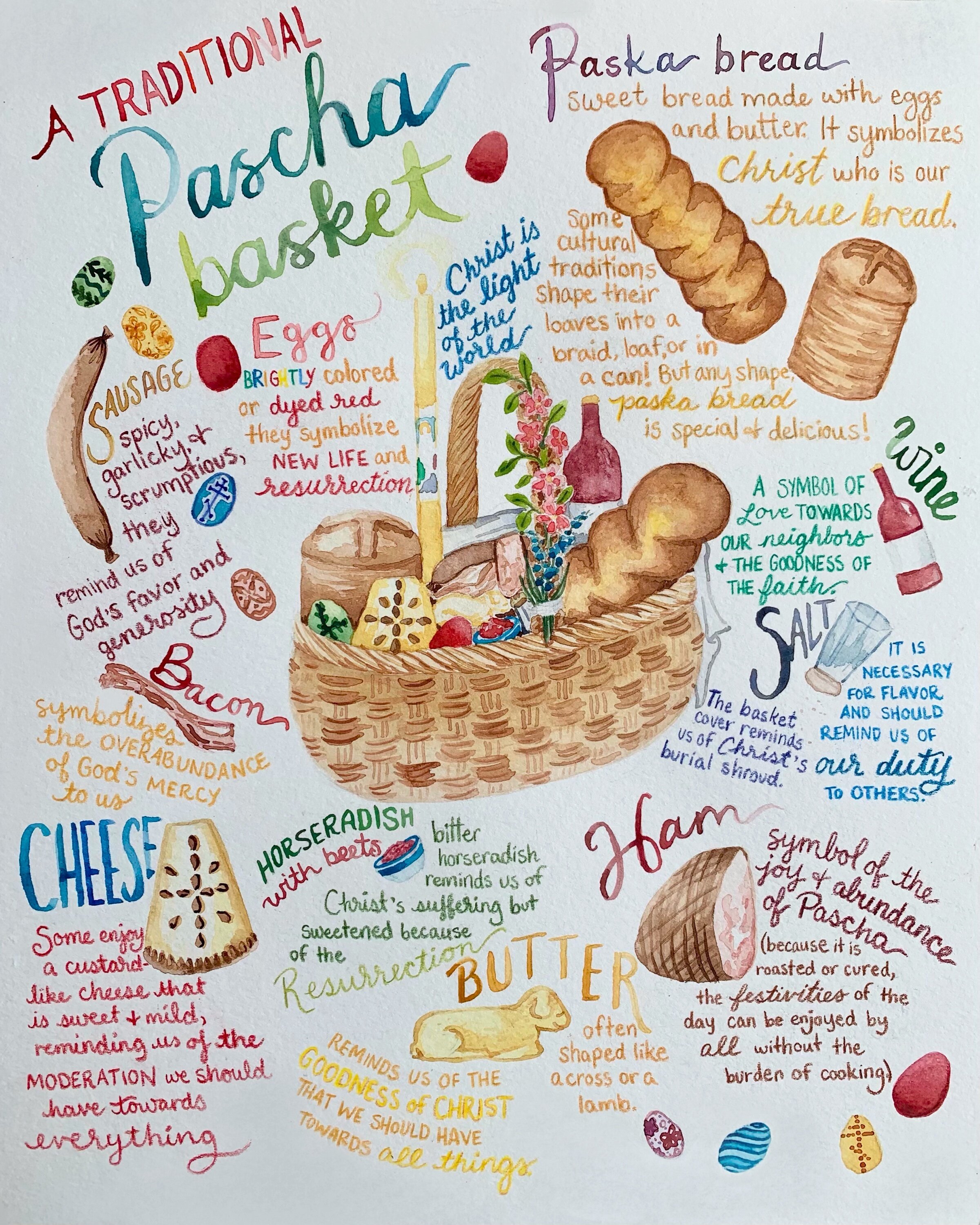
If you’re new to creating a Pascha basket, welcome! I’m glad you found this little blogpost. My hope is to share an example of a Traditional Pascha basket, which stems from the Russian tradition, and share what each item symbolizes.

In this blogpost you will find resources for popular feast days celebrated in the Orthodox Church in March along with links to where to find them!
This month is jam-packed on the Orthodox Christian Liturgical Calendar. But before you have a min-panic attack… let me break it down for you. Triodion is in full force (the 3 weeks leading up to Lent), we are trekking through towards Lent (starts March 18th), so much of what I’ve listed here is automated. If you are attending services each Sunday and commit to embracing Lent as much as you’re capable of, you’ll be just fine. I’ve added in some fun feast day traditions here if you’re feeling extra capacity but don’t over stress about it. So here are some ways to embrace the liturgical season this month (IN SLIDES):

Check out this delicious “bite-size tradition” printable of homemade butter for the feast of St Brigid (February 1/14). Each month I will be releasing a new recipe to help families live out the Liturgical Year in their kitchens! The series is called “bite-size traditions” kitchen series!

Introducing a Brand New Series on PNP Kids🌟✨I am partnering with Patristic Nectar Kids YouTube Channel to create Orthodox content with families in mind. Check out our first video on Youtube!

A few months ago I set up an Amazon store front with the hopes of making convenient little lists for supplies for various feast days! Fun right? Majority of us use Amazon, so it’s just a convenient option for busy families. Check out this list for the Presentation of Christ + St Brigid (Feb 1 and 2nd)
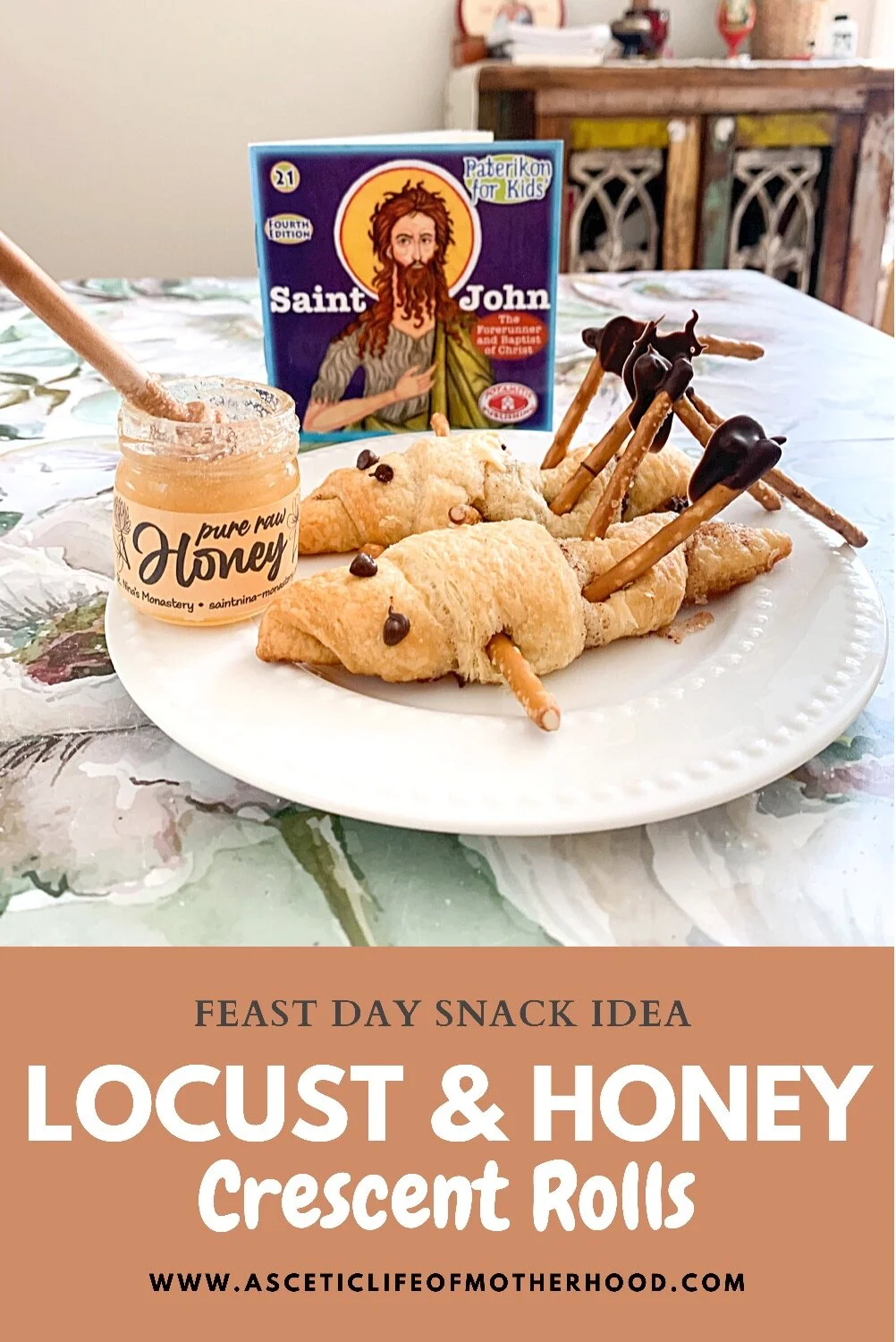
We know from the Bible that St. John lived in the wilderness, preaching repentance, preparing the people’s hearts to receive Him and paving the way for our Lord’s ministry. Did you know what he ate while in the wilderness…. ? Locust and honey! For his feast day, we made some yummy crescent rolls to look like locust, and topped them with honey!
From the Blog:

One of the sweetest ways to help children connect with the lives of the saints is through food, especially when the recipe itself has a connection to the saint’s story. Saint Euphrosynos the Cook was a humble monastic who was granted the ability to dwell in Paradise, where he gave away apples from the garden. These simple “Three Baked Apples from Paradise” are a fun way to bring that story to life for your family as you celebrate the feast day of St. Euphrosynos.
The recipe is intentionally simple enough for children to help make, and with just three apples, it’s perfect for a small family—but it can easily be adjusted to make more servings for a larger family, homeschool group, or parish gathering. As you prepare and enjoy these baked apples together, you can remind your children of St. Euphrosynos, his humility, and the beautiful glimpse of Paradise God allowed him to experience.
For the feast of the Nativity of the Theotokos, make Queen of Heaven cupcakes! A fun way to help children remember this feast is by celebrating the Theotokos' “birthday” with cupcakes! Adorned with blue frosting, the liturgical color for her feast, and add some star sprinkles or cupcake toppers. It is said that her womb was more "spacious than the heavens."
Phanouropita (or fanouropita) is a traditional Orthodox cake with a beautiful story behind it. Orthodox Christians often pray to St. Phanourios, the patron saint of lost things, when we’ve misplaced something. We ask for his intercession, and when the lost item is found, it is customary to bake phanouropita, bring it to church to be blessed by the priest, and then share it with the parish community.
This post shares a simple, meaningful honey-spiced cake recipe called “Be the Bee,” inspired by St. Paisios and designed to bring Orthodox tradition into the home through a memorable, family-centered feast day celebration.
Here you’ll find 10 fun ways to celebrate Ascension as a family in hopes that one of these ideas will spark some ideas for you as you live out the Liturgical Calendar. Perhaps they will become your annual tradition for each Ascension! These are not just activities for activities sake, of course. My hope is that these will aid you in sharing more about our faith with your children in a way that is developmentally appropriate, allows for their exploration and participation in the feast, and hopefully cultivate a rich soil in their hearts that allows the seed of Truth that stays with them all the days of their life.
Rich and creamy, Pascha cheese is a beloved centerpiece of an Orthodox Paschal table. Traditionally made from farmer’s cheese (or variations like ricotta or cottage cheese), blended with butter, eggs, sugar, and cream—and sometimes studded with decorations—this sweet dish is molded into a pyramid shape and often adorned with the letters “XB,” meaning “Christ is Risen.” This recipe takes several days (at least 2) so it is good to prepare ahead of time to ensure you have enough time to allow the cheese mixture to drain and become a solid cheese.
On this page, you’ll find a curated guide to March feast days in the Orthodox Church, with simple explanations, family-friendly ideas, book recommendations, and links to helpful Orthodox Christian resources.
If you’re new to creating a Pascha basket, welcome! I’m glad you found this little blogpost. My hope is to share an example of a Traditional Pascha basket, which stems from the Russian tradition, and share what each item symbolizes.
The tradition of making Lazarakia—small, sweet buns shaped like Lazarus—is a beloved Greek tradition observed on Lazarus Saturday, the day before Holy Week. It commemorates the miracle of Jesus raising Lazarus from the dead, as described in the Gospel of John (John 11:1–44), which took place just before Christ’s Passion. These buns, also known as Lazarus Buns, are shaped to resemble Lazarus wrapped in grave clothes, with his arms crossed, just as he is depicted in icons. The eyes are typically made from cloves or chocolate chips. Made with a lightly sweet, vegan dough, Lazarakia are a Lenten fasting food, and the tradition of baking them—especially with children—has become a cherished practice not only in Greece but among Orthodox Christian communities around the world.
In this blog post, I’ll share the recipe I use, how this feast is celebrated throughout the world, tips for baking with children, the meaning behind this tradition including the story, book recommendations, additional resources and how we celebrate this meaningful day as a community.
One of my favorite parts of Holy Week preparation is dyeing red eggs which is an important tradition in the Orthodox Church. Some of the memories I carry with me each year: the warmth of the kitchen, my children’s delightful squeals as they watch the eggs turn a bright, vibrant red, and the joy we feel a we shine the eggs. Each time we make them, I am in awe of the little miracle of transforming white eggs to a bright red using onion skins. But did you know these red eggs hold meaning—they symbolize the blood of Christ, His resurrection, and the joy of new life? In this blogpost, I want to share not only how we dye our eggs using natural ingredients, but explain why this tradition means so much to me and to so many Orthodox families around the world.
Koliva a traditional wheat berry dessert made in the Eastern Orthodox Church which is served as a memorial dish at funerals, memorial services which is symbolic of the the cycle of life, death, and resurrection. Just as Jesus taught in the Gospel of John: “Truly, truly, I say to you, unless a grain of wheat falls into the earth and dies, it remains alone; but if it dies, it bears much fruit.” The wheat berries symbolize the body of the departed loved one which is planted into the ground, and lies in wait and hope of the resurrection of the dead. Recipe and video tutorial included.

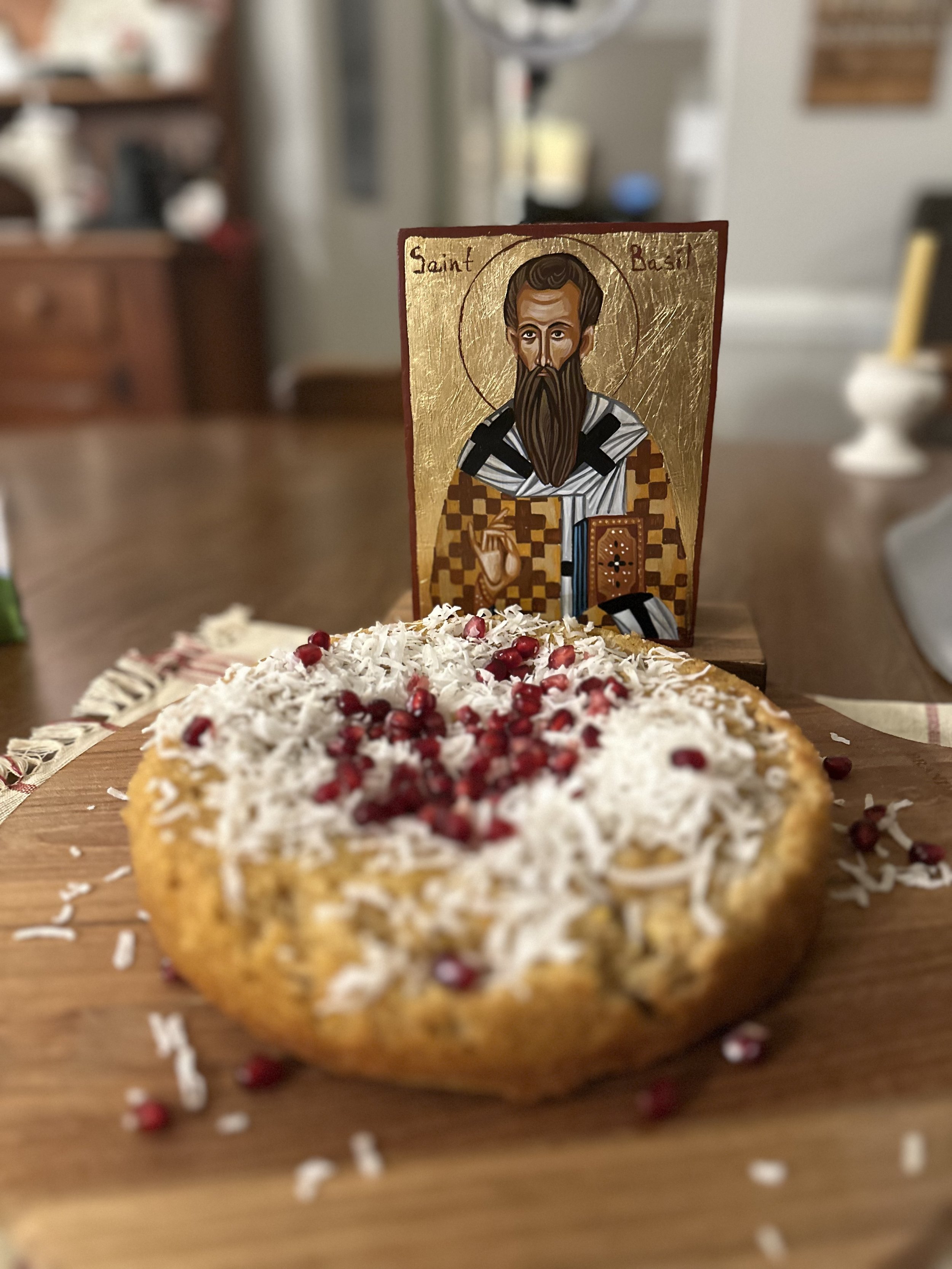
Have you ever heard of St Lucia of Syracuse? She was a young martyr who lived in the 4th century in Italy and is celebrated in many Scandinavian countries on her feast day, December 13th. Each year on her feast day, children dress up in all white, wear a crown of candles and bake St Lucia buns to share with their loved ones and friends. Many churches also host a St Lucia Procession where both boys and girls process while singing a hymn to St Lucia. She is a wonderful saint, especially for children to look to because of her acts of mercy to the poor and her boldness and bravery as she faced persecution and eventually martyrdom for the sake of Christ.
In this guide you will find more about the many Scandinavian traditions surrounding this feast, the story of her life and martyrdom, and additional resources to help you create feast day traditions with your families for years to come!
During the Nativity season, I love to embrace all things Christmas. But I especially love a good Feast Day theme that connects a Christmas activity to a saint! There are many traditions on the feast of St Barbara as she is a beloved saint celebrated throughout the world, but since she is considered the Patron Saint of Architects, builders, and stone masons, we chose to make our Gingerbread houses on her feast day to remember her story!
In this guide you’ll find simple and easy ideas to celebrate the the Feast of St Nicholas with your kids - emphasis on easy! Activity suggestions, book recommendations, and additional information so you can share his story so together you can grow to love him even more!
St Catherine of Alexandria is celebrated on November 25th in the Orthodox Church. She is a beloved saint known for her wisdom, courage, and unwavering faith. Patron saint of unmarried women, craftspeople who work with wheels (potters and spinners), philosophers, students, and those seeking knowledge, St Catherine’s day offers a beautiful opportunity to reflect on her legacy through tradition and food. In this post, we’ll share a special recipe inspired by her feast day—a dish that brings together rich history and flavors, perfect for honoring this remarkable saint with your family or community. Whether you’re hosting a celebration or simply seeking a meaningful connection, this recipe will be a cherished treat for years to come!
Did you know that Chrysostom means "golden mouth"? Check out this super easy feast day tradition of making the "golden mouth milk" for the feast of St John Chrysostom! Easy and healthy and one that you can pull together with items you probably already have on hand!
The beheading of St John the Baptist is a strict fasting day. His feast day is always observed with strict fasting, and in addition, many pious Orthodox Christians will not eat food from a flat plate, use a knife, or eat round food on this day. Why? It’s to help us remember the story of St John’s beheading, as his head was served on a platter and given to Herodias’ daughter, according to the Scriptures. By avoiding a knife, plate, and round things, we are avoiding serving anything that resembles a head on a platter. The challenge itself reminds us of the story, and since it’s a solemn feast, we fast on this day.
All of my favorite feast day traditions have some food-related theme to them. St Phanourios, or the baking of the phanouropita, is one of my absolute favotires and just so happens to feast day tradition that sparked my love for learning more about the cultural food traditions celebrated throughout the world! This year, we had the joy of serving phanouropita for coffee hour!
Have you ever heard of St. Phanourios, the patron saint of lost things? St Phanourios is known in the Orthodox Church as a saint who helps people find lost or stolen items. We can ask the Saints for help! We ask St. Phanourios to help us find whatever we lost, and when we find it, we bake a cake and share it with friends and loved ones as a way of giving thanks. This special tradition comes from Greece and the special olive oil citrus cake is called “Phanouropita!” In this blogpost, I am sharing the recipe for a simple baked phanouropita donut, which is ideal for sharing with others, an important element in the tradition!
St Phanourios is considered the patron saint of lost things. In this guide you’ll find simple and easy ideas to celebrate the feast of St Phanourios with your kids - including feast day traditions, activity suggestions, book recommendations, and additional information so you can share his story so together you can grow to love him even more!
Here you’ll find 10 easy ideas to celebrate Pentecost as a family. As a busy mom with 3 little ones, I know how precious your time is, so I hope to simplify how you celebrate feasts together. In this list you’ll find ways to prepare your kids for Pentecost (i.e. kneeling prayers, song, etc) and you will find fun recipes and stories too.
Here’s a simple and fun activity for you to do this weekend as a family as you live Liturgically. Make “mud” brownies! I am always a fan of incorporating food into any feast day, especially for children! In addition to it being obviously yummy, it’s also a great sensory experience to help kids connect the healing element (mud) that Jesus used to heal the blind man!
If you’re new to creating a Pascha basket, welcome! I’m glad you found this little blogpost. My hope is to share an example of a Traditional Pascha basket, which stems from the Russian tradition, and share what each item symbolizes.
In this blogpost you will find resources for popular feast days celebrated in the Orthodox Church in March along with links to where to find them!
This month is jam-packed on the Orthodox Christian Liturgical Calendar. But before you have a min-panic attack… let me break it down for you. Triodion is in full force (the 3 weeks leading up to Lent), we are trekking through towards Lent (starts March 18th), so much of what I’ve listed here is automated. If you are attending services each Sunday and commit to embracing Lent as much as you’re capable of, you’ll be just fine. I’ve added in some fun feast day traditions here if you’re feeling extra capacity but don’t over stress about it. So here are some ways to embrace the liturgical season this month (IN SLIDES):
Check out this delicious “bite-size tradition” printable of homemade butter for the feast of St Brigid (February 1/14). Each month I will be releasing a new recipe to help families live out the Liturgical Year in their kitchens! The series is called “bite-size traditions” kitchen series!
Introducing a Brand New Series on PNP Kids🌟✨I am partnering with Patristic Nectar Kids YouTube Channel to create Orthodox content with families in mind. Check out our first video on Youtube!
A few months ago I set up an Amazon store front with the hopes of making convenient little lists for supplies for various feast days! Fun right? Majority of us use Amazon, so it’s just a convenient option for busy families. Check out this list for the Presentation of Christ + St Brigid (Feb 1 and 2nd)
We know from the Bible that St. John lived in the wilderness, preaching repentance, preparing the people’s hearts to receive Him and paving the way for our Lord’s ministry. Did you know what he ate while in the wilderness…. ? Locust and honey! For his feast day, we made some yummy crescent rolls to look like locust, and topped them with honey!
One of the sweetest ways to help children connect with the lives of the saints is through food, especially when the recipe itself has a connection to the saint’s story. Saint Euphrosynos the Cook was a humble monastic who was granted the ability to dwell in Paradise, where he gave away apples from the garden. These simple “Three Baked Apples from Paradise” are a fun way to bring that story to life for your family as you celebrate the feast day of St. Euphrosynos.
The recipe is intentionally simple enough for children to help make, and with just three apples, it’s perfect for a small family—but it can easily be adjusted to make more servings for a larger family, homeschool group, or parish gathering. As you prepare and enjoy these baked apples together, you can remind your children of St. Euphrosynos, his humility, and the beautiful glimpse of Paradise God allowed him to experience.