
St Basil Feast Day Guide
If you’re looking for a meaningful way to ring in the New Year, consider this wonderful Greek tradition of baking Vasilopita on January 1st! St Basil of Ceserea, also known as St Basil the Great, is among the most well-known and beloved saints in the Orthodox Church. He is also one of the Three Holy Hierarchs of the Church, along with St John Chrysostom and St Gregory the Theologian. His feast day is celebrated on January 1, so the New Year is marked with his blessing. In this guide you will find more about the many Greek traditions surrounding this feast, the story of his life, and additional resources to help you create feast day traditions with your families for years to come!

Who was St Basil the Great?
Saint Basil was born in 330 A.D. in Caesarea, Cappadocia.
He was born into a wealthy and very pious family – many of his immediate relatives are also Saints of our Church (his mother Emmelia and his grandmother Macrina, as well as all his siblings, Macrina, Gregory of Nyssa, Peter of Sebastia, and Naucratius).
As a young man, he received the best education of his time, in areas such as philosophy, history, rhetoric, astronomy, medicine, and geometry, not only in is native Caesarea, but also in Constantinople and Athens. In Athens he cultivated a strong friendship with the young Saint Gregory, later called “the Theologian”, a relationship that lasted for their whole lives.
Upon completion of his studies, he returned to Caesarea, where he initially pursued a career as a rhetoric. Soon, under the influence of his older sister Macrina, he decided to give up his career and live as a monastic in voluntary poverty. He lead an ascetic life together with his friend Saint Gregory the Theologian, building monasteries and establishing guidelines for cenobitic monasticism.
In 370, he became Bishop of Caesarea, where he ministered to his flock with great love and selflessness. He established hospitals, schools, orphanages and homes for the elderly. These institutions together consisted a small community named “Vasiliada”.
Saint Basil fought fervently against heresies (false teachings), and wrote extensively on how to live and worship in the Orthodox way. He is considered the author of the Divine Liturgy bearing his name, which is celebrated ten times during the year.
A laboring ascetic, Saint Basil reposed in complete poverty and in poor health, on January 1, 379, at the age of 49.
One liturgy attributed to him is The Divine Liturgy of Saint Basil the Great, a liturgy that is somewhat longer than the more commonly used Divine Liturgy of Saint John Chrysostom; it is still used on certain feast days in the Church, such as every Sunday of Great Lent and January 1, on which his memory is celebrated.
Source: https://orthodoxpebbles.com/saints/saint-basil-the-great/
1. Attend a Service
As I often say, the best way to celebrate a feast day of any saint is by attending a Divine Liturgy (as you are able). And what is a better way to ring in the New Year than to begin with worship and thanksgiving to our God? This is an important way to connect our lives at home with our lives in the church, and it is a beautiful way to honor St Basil. Check to see if your church is offering a service either on New Year’s Eve or New Year’s Day!
2. Read the Story of His Life
One of my favorite ways to teach my kids about a Saint is by reading the story of their life. Thankfully there are a few chidlren’s books available for learning more about St Basil (I’ll share below) and the traditions on his Feast Day. Knowing who the Saint is and the stories of their life serves as the foundation to connecting with the feast day! I find that the combination of story telling and having a hands on activity helps us (and especially children) remember the story far more, and hopefully we can learn to become more like them- more Christ-like! In addition to the resources below, you can read more about St Basil HERE on Orthodox Wiki.

The Story of the Vasilopita Paterikon for Kids by Potamitis Publishing
This pocket size book is perfect for sharing the story behind St Basil and Vasilopita! I cannot rave about these little Paterikon for Kids books more. They are small, lightweight, illustrated and easy to read, and small enough to tuck away in your purse or church bag. For $3.95 per book and free shipping in the US, how can you go wrong? While you're on their site, pick up a few more books for the upcoming feasts (Theophany, St Anthony the Great, St Xenia, The Three Hierarchs, or you can just invest in their January Saints Package). You can buy these books directly on their site HERE or in any of the direct links underlined/tagged above.

The Lucky Cake by Anna Prokos available on Amazon
I just ordered this book from Amazon this year per a friend’s recommendation. It’s a paperback picture book written for children that explains both the tradition of Vasilopita and the story of St Basil. The little boy, Billy, loves his yiayia’s New Year’s cake, but usually he isn’t the one to receive the special coin inside. That is, until this year! I love that it includes the story behind a family who celebrates this feast, plus the true story of St Basil. My girls enjoyed making the connection between the cake in the book and our own Vasilopita! This sweet short story would make a great addition to your feast day book collection. And since it’s on Amazon, you can likely receive it just in time for the feast with their 2-day shipping! You can buy it HERE.


Additional Books that include the Story of St Basil:
The Lives of Our Saints, Book 8 by Spiritual Fragrance Publishing
Friends of Christ - January, Lives of the Saints for Children by Newrome Press

3. Traditions on his Feast Day
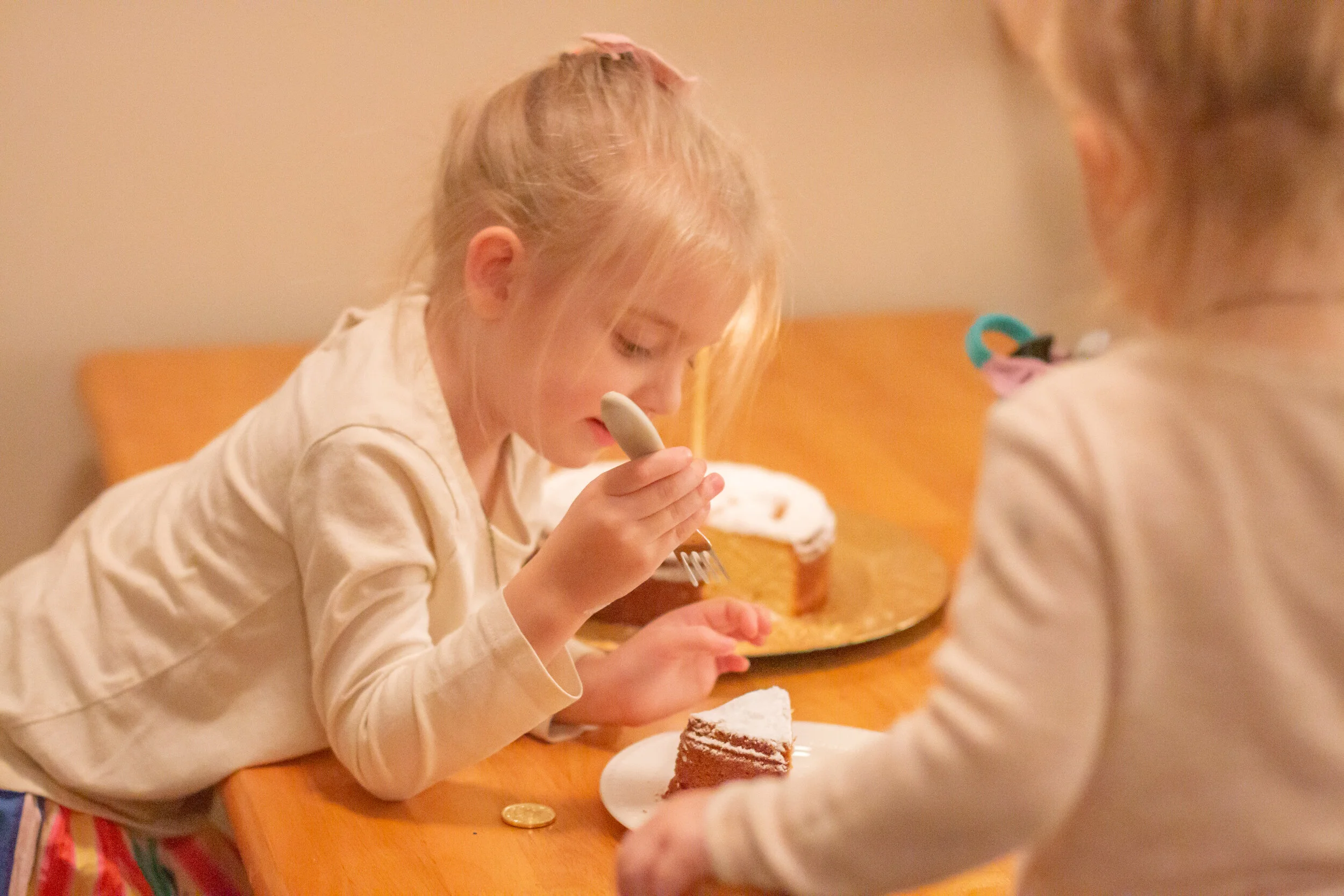
The Greek tradition of the Vasilopita (St. Basil’s cake or pie, from the Greek Vasilios = Basil, and pita = pie) is an important part of the Greek New Year’s Day celebration. A special cake containing a hidden coin is cut and shared among the members of the household. Whoever gets the piece with the coin hidden inside of it, is considered to have St. Basil’s blessing for the whole year! It is made of a variety of doughs, depending on regional and family tradition. I’ve included two recipes below : Vasilopita (cake) and Vasilopita Tsoureki (sweet bread). It is also customary on his feast day to visit the homes of friends and relatives, to sing New Year's carols, find ways to serve the poor, and to set an extra place at the table. St Basil, being born into a wealthy family, gave away all his possessions to the poor, the underprivileged, those in need, and children, so in his honor we remember the poor. In some areas in Greece, it is actually St Basil that is brings children presents, not “Santa”.
Check out this YouTube video by Orthodox Mom about St Basil Day!


So what’s the story behind this sweet bread and a coin in it? Glad you asked!
Vasilopita Tradition
This tradition is said to be based on the story that follows:
During a time of famine, the emperor demanded an excessive tax from the people of Caesarea, so each family had to give up all their valuables – money and/or jewelry. Upon finding out this injustice, St. Basil fearlessly defended his people, calling the emperor to repentance. The emperor was moved by St. Basil’s speech, canceled the tax and returned all the valuables to the Saint. The Saint was faced with a daunting task: out of a large amount of items, he had to return each one to its rightful owner. He prayed, then prepared a huge cake and baked the treasures inside of it. After calling his flock to prayer, he blessed and cut the cake, offering a piece to each person. Miraculously, each owner received his own valuables in his piece of the cake. Vasilopitas have been baked on St. Basil’s feast day every year since his repose, to commemorate this miracle.
Source: https://orthodoxpebbles.com/saints/saint-basil-the-great/
Vasilopita Cake Recipe from Orthodox Pebbles:
Ingredients
1 cup softened butter
1 cup sugar
4 eggs
2 cups flour
3 tsp baking powder
pinch of salt
grated zest from one orange and one lemon, both unwaxed
1 tsp vanilla
powdered sugar for dusting
Preheat oven to 350 degrees Fahrenheit. Wrap the coin in a small piece of aluminum foil. Generously butter a 9-inch springform pan and dust all over with flour. Beat all the ingredients together using a stand-mixer fitted with the paddle attachment until very light and fluffy, about 3 minutes. Pour mixture into pan and bake for about 45 minutes, or until wooden skewer inserted in the center of the cake comes out clean. You can either mix the coin in the raw dough after you pour the dough in the pan, or insert the coin at the bottom of the cake after it is baked. Let the cake cool and dust with powdered sugar. It is customary to write the number of the year in a decorative fashion on the cake’s surface.
** I made the above recipe and only had an 8-inch springform pan, which I cooked for 10 additional minutes (55 minutes) until my skewer inserted in the middle of the cake came out clean.

Vasilopita Tsoureki Recipe by Hey Foodie Girl Blog
Since I was sharing the Greek traditions surrounding St Basil Day, I couldn’t pass up the opportunity to try out an authentic Tsoureki recipe from one of my favorite Greek blogger/friend Catherine! This is her family recipe, tried-and-true, and the results did not disappoint! It’s definitely a labor of love, as it takes many hours of resting, rising, and finally the bake, but don’t be deterred! It makes the most scrumptious sweet bread that rivals any bakery in Greece! Just don’t forget to tuck a coin in the dough! She recommends baking it the day before, on New Year’s Eve so you can cut into it just after midnight or in the morning of New Year’s Day on St Basil’s Feast Day. You can find her recipe HERE along with detailed instructions that even a novice baker can easily comprehend and execute!


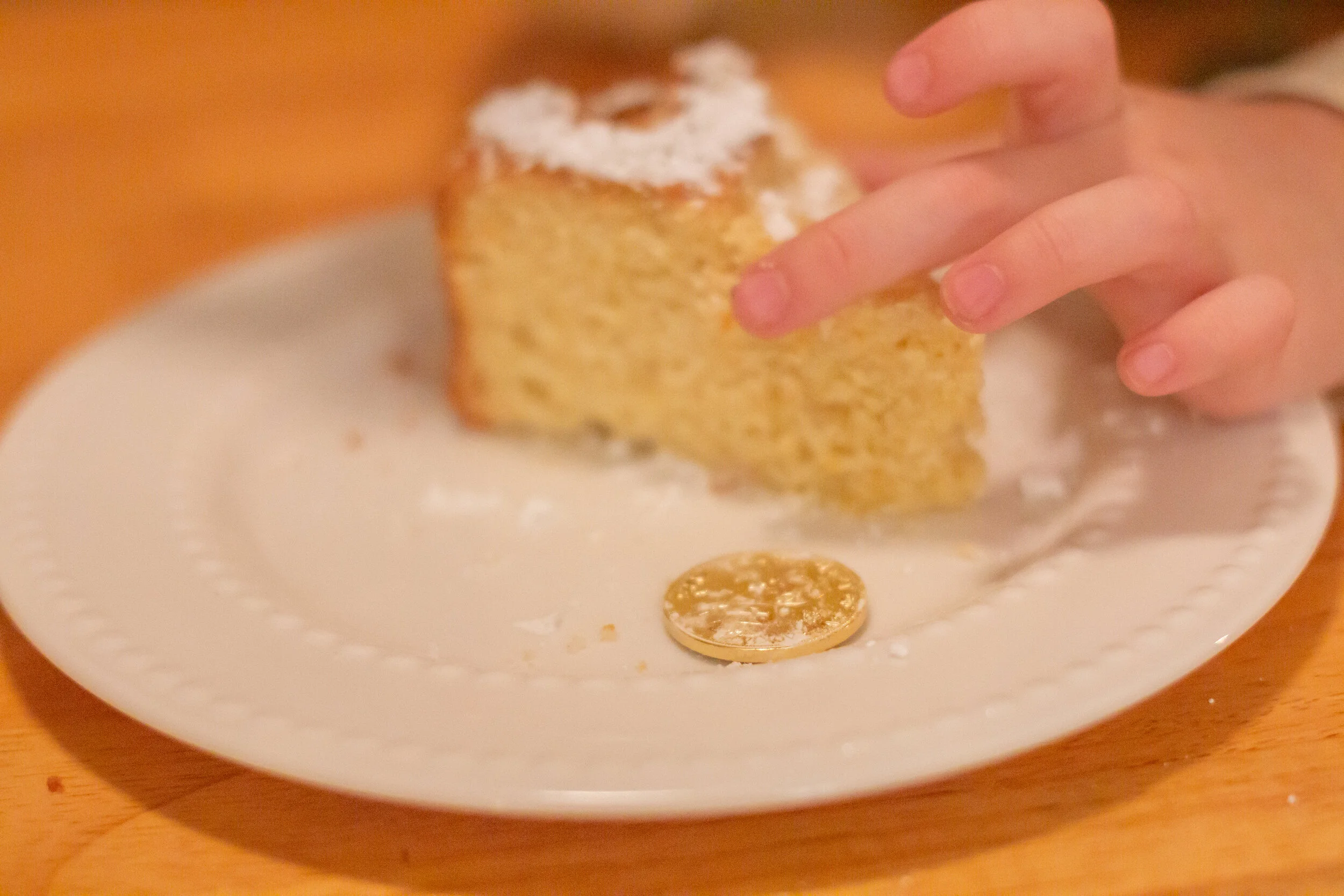
An important element of the Vasilopita is of course the lucky coin that is tucked inside the cake or bread! This is what sets this bake apart from any other bake! I’ve read that you can use any coin: quarter, dime, penny, etc, as long as you wrap it in foil before inserting it. This year, however, we received a very special coin from Patmos Press that we can use year after year in our family’s Vasilopita! It’s a golden coin stamped with an icon of St Basil along with the inscription “Saint Basil the Great of Cappadocia”. I was very impressed with the sturdiness and brilliance of the coin. My only regret is not ordering more so I could hand out Vasilopita to friends! Ours came with a special clear container so we can store it away for years to come without damaging it. You can order this coin HERE through their Etsy shop. The coin alone costs $8.95 and with the added clear container it’s only a dollar more at $9.95. A great addition to any feast day collection!


4. Prayers and Songs
On the feast day for a saint we are remembering, we like to add an additional prayer during our family prayer time. A simple formula for this, if you don’t have one written down already, is saying “O Holy Saint Basil, pray unto God for us.” My children will often say this simple prayer during family prayer time. There are, however, special prayers written for St Basil which are sung during Liturgy, which go as follows:
Troparion for St Basil (Tone 1)
Your proclamation has gone out into all the earth
Which was divinely taught by hearing your voice
Expounding the nature of creatures,
Ennobling the manners of men.
O holy father of a royal priesthood,
Entreat Christ God that our souls may be saved.
Kontakion for St Basil (Tone 4)
You were revealed as the sure foundation of the Church,
Granting all men a lordship which cannot be taken away,
Sealing it with your precepts,
O Venerable and Heavenly Father Basil.

Songs
If you’ve never heard of a New Year’s Carol, you can hear an example of a traditional Greek New Years Carol on YouTube HERE.
5. Additional Activities
I cannot rave enough about what a wonderful FREE online resource Orthodox Pebbles is! They are an amazing teaching resource for parents, creating high-quality, free, online Orthodox Christian educational resources for young children. They also created an entire line of Fabric Learning Sets available for purchase with St Tabitha’s Workshop that are some of my favorite tools for teaching my kids. I literally have purchased ALL of them, because my kids love them and they are the perfect quiet activity for busy hands at church. Anyway, I digress…

Icon craft
This year we used their St Basil the Great Lesson plan from their website and created a St Basil Icon craft using resources we already had on hand: construction paper, washi tape, glue, and glitter! The girls proudly held up their craft and displayed it on our altar while they tasted their Vasilopita. I’ll definitely be saving these forever!
In addition to the icon craft, you can find an easy to follow lesson plan, a vasilopita craft using household items, St Basil Board Game, and their recipe for Vasilopita (which we tried above - highly recommend)! You can find it all HERE on their website. Be sure to check out other lessons plans/resources on their site, including one for Theophany (Epiphany) which is celebrated on Jan 6th, and one for the Three Holy Hierarchs on Jan 30th.


I’ll be mentioning Orthodox Pebbles a lot in the coming year because I appreciate the work they do so very much, and I want others to know about them as well. They create these resources for FREE so that more families can have access to high quality materials in order to teach the faith to their children. Consider making a donation towards their efforts so they can continue creating these wonderful and needful resources - you can make a donation on their Patreon Site HERE.

Serving the Poor
St Basil wrote extensively on how to live as an Orthodox Christian (you can find many of his works translated and published by SVS Press HERE) which includes our responsibility as Christians to care for the poor.
“Consider yourself, who you are, what resources have been entrusted to you, from whom you have received them, and why you have received more than others. You have been made a minister of God’s goodness, a steward of your fellow servants… Resolve to treat the things in your possession as though belonging to others.” - St Basil the Great
One way to honor St Basil is by finding ways to serve the poor as a family. Create a plan for how you will do this in the coming year and include your children in it as well! Some ideas include:
Donate your gently used items, canned goods/food, or money to your local homeless shelter
Organize a collection drive - collect blankets or coats for the homeless in the winter, socks/underwear, etc. Contact the organizations who work for poor people to find out what they need and then organize collection drive by setting up containers at church, schools, or community centers in which people can drop off donations
Assemble Care Kits for the homeless to keep in your car to hand out
Volunteer at a food bank, homeless shelter, or Christian pregnancy crisis center in your area
If you frequently pass by homeless on the street, consider packing an extra sack lunch to hand out. Pray and ask God to reveal the person who is hungry, and he will surely provide!
For more ways to connect, check out FOCUS North America which is an Orthodox Christian organization


Final Thoughts
Lastly, as a reminder, none of these items or traditions I mentioned above are necessary to follow. The beauty of our faith is it is celebrated all over the world, so my hope is to share with you various traditions as a way of introducing you to them. In our family we have adapted some traditions which we have received from others in our parish, and we make them our own. Find what works best for your family and add your own personal additions!
Be sure to follow along with me on Instagram for more Feast Day resources in the coming year! Also, consider subscribing below to receive updates on future guides and resources.
Thank you for all your support and for checking out my latest Feast Day guide. Good strength and joyous feast, friends!
-Kh Destinie