Orthodox Nativity Fast Guide: Practical Guide to Observing the Nativity Season
The 40 days leading up to the birth of Christ, the Church invites us into a season of preparation: a time of fasting, increased prayer, and almsgiving. The Nativity Fast, also known as Orthodox Advent, is a set-aside time to prepare our hearts to receive the coming Lord. In Her wisdom, the Church knows our weakness and our tendency to become distracted by the cares of this world. She gives us these forty days to intentionally turn our attention back toward Christ. Our souls were created for eternity, and this world is passing away. During the Nativity Fast, we are reorienting our lives toward Christ, not simply making Him the center of our lives, but recognizing Him as our very source of life. Through fasting, prayer, and acts of love, we cultivate a deeper longing for Christ and prepare to welcome Him into our hearts.
As Orthodox Christians, we begin to notice little changes as this season unfolds. The hymns in the Church begin to change, the days grow shorter and darker, and our calendars fill with additional services, opportunities to serve those in need, and special traditions. Our homes may begin to reflect the season, too, with beautiful greenery, red coverings beneath our icons, and the familiar sights of Christmas preparations. We change the way we eat, abstaining from certain foods as part of the Church’s fasting discipline. We strive to increase our prayers and look beyond ourselves to care for those in need. The Orthodox Nativity Fast begins on November 15 and continues for forty days, leading us to the celebration of the Nativity of Christ on December 25. For those whose Church is following the Old Calendar, the Fast begins November 28 and the Nativity is celebrated on January 7.
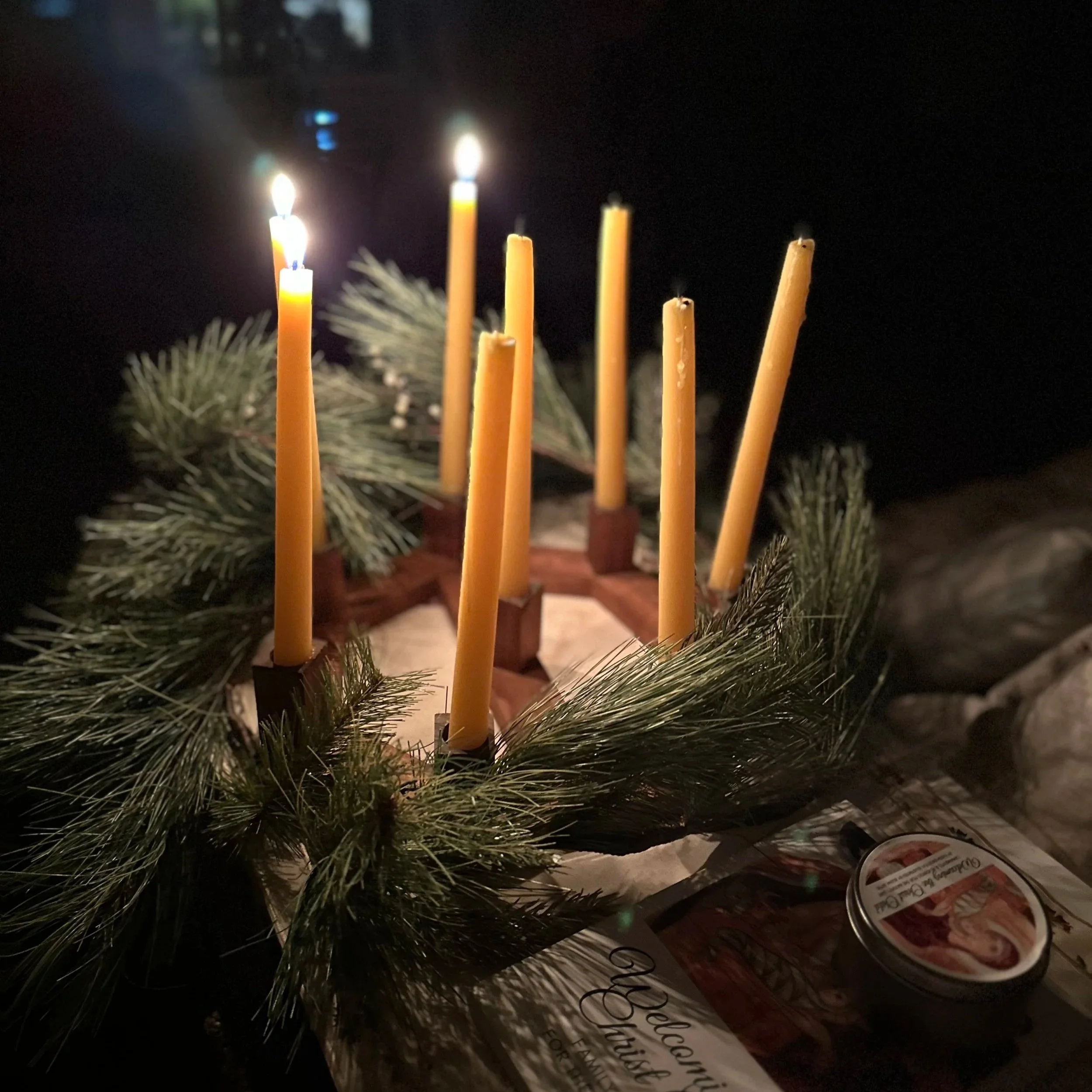
There are so many beautiful ways to bring the life of the Church into our homes during the Nativity Fast, especially when we have little ones watching and learning alongside us. In this practical guide to the Orthodox Nativity Fast, I want to share some of the resources and traditions our families can use throughout the season. From creating an Advent wreath and reading Nativity books together to countdown calendars, feast-day celebrations, and other meaningful family traditions, there are many simple ways to make this season intentional.
Of course, every family will develop its own unique traditions, and these things take time to build. Please don’t feel pressured to begin everything at once! Start small, choose one or two things that will help your family enter into the season, and be faithful in those. Perhaps in the years to come, you can slowly add more. The goal isn’t to create a picture-perfect Orthodox Nativity season, but to prepare our hearts and homes to receive Christ.
Advent Wreath
One of my favorite Advent traditions is creating an Advent wreath. History of Advent wreaths : Advent wreaths first originated in Germany in 1830 and the story goes that Johann Hinrich Wichern (1808-81), a pastor in Germany, built a wreath out of an old cartwheel to help the children in his mission school count the days until Christmas. He added small candles to be lit every weekday and Saturday during Advent, and on Sundays, a large white candle was lit. Although it wasn’t widely popular until the 19th century, German immigrants then brought the tradition with them to America in the 20th century.

An Advent wreath is a wonderful tradition to bring to your home! Although it’s origins did not stem from Orthodox countries, we certainly sanctify everything we do! I like to call it the American contribution to Orthodoxy. A lit candle is a symbol of expectation and hope, especially poignant in the darkness of winter. The candles of the advent wreath can light our homes and warm our hearts as we look forward to the coming of our Lord Jesus Christ.
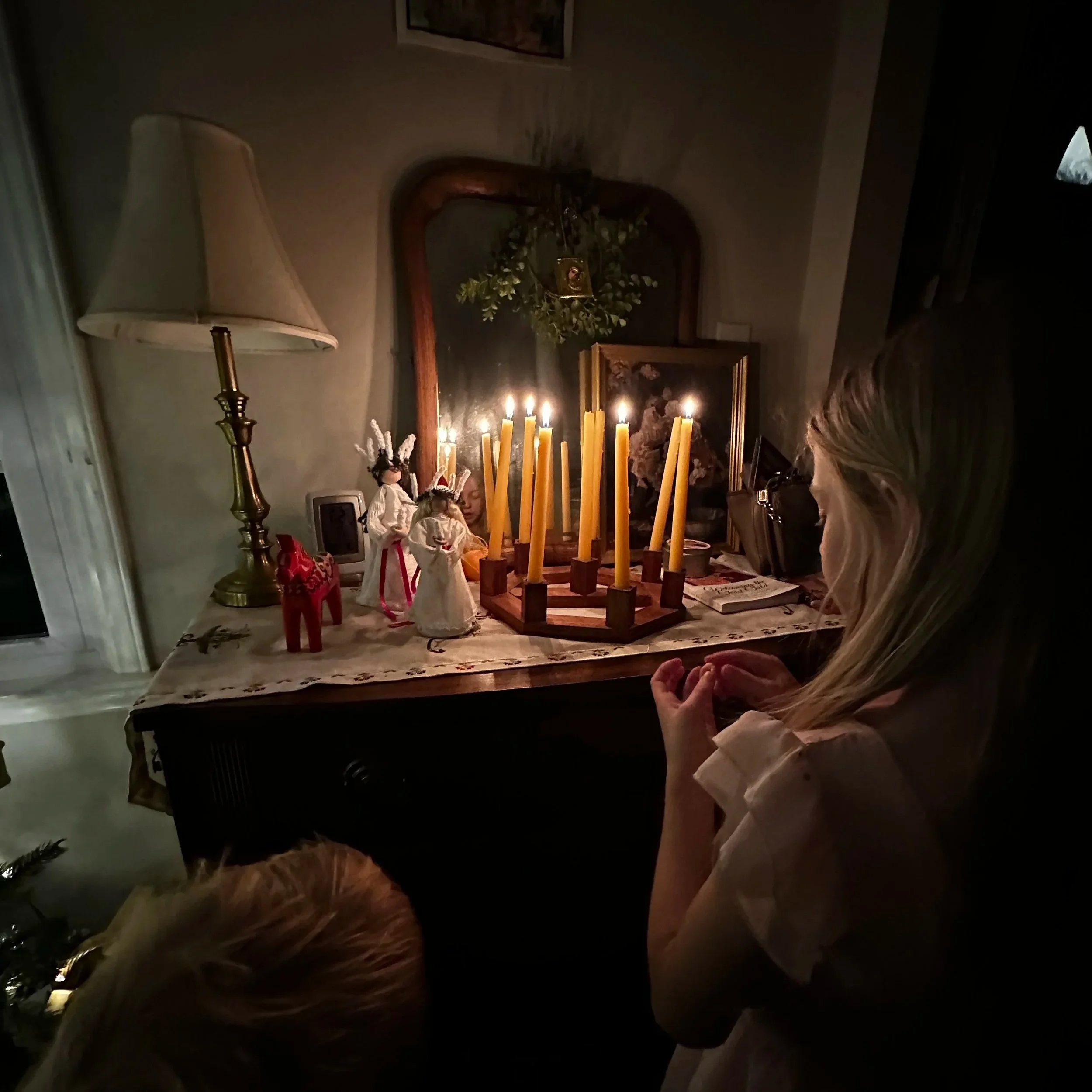
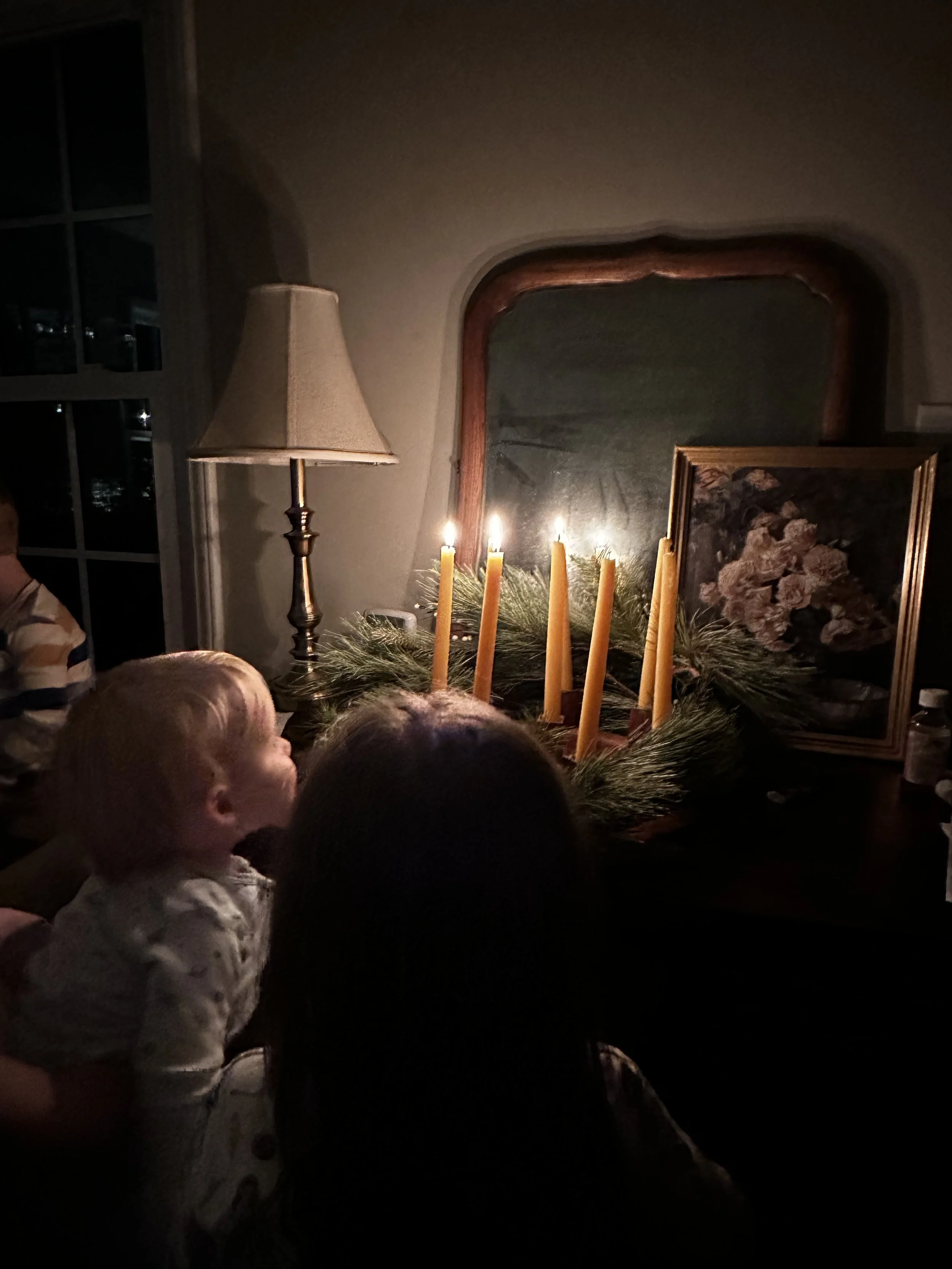
If you’re unfamiliar with how to use an Advent Wreath, it is a circle of candles that are lit one at a time, increasing by one each week of Advent. There is a candle in the center that is lit on Christmas. The advent wreath is often surrounded by greenery. Every part of the advent wreath contains symbolism that points us back to Christ.
Check out this video with Patristic Nectar Family on how to use an advent wreath
How to set up an Advent Wreath:
Find a prominent place in our home that your family can easily see and gather near. This can be your kitchen table, home altar, or some other prominent place.
Setting up an Advent Wreath - when I first wrote this blogpost, there were no Orthodox Advent wreaths on the market. This year, much to my excitement, there are several options available. The basics of what you will need are 7 candles with holders (some holders have 8 candles to account for the times where there is an extra Sunday during Advent):
Wooden Advent Wreath through Draw Near Designs
Brass Advent Wreath through Legacy Icons
Cradle-to-Cross Wooden Wreath by The Keeping Company (includes extensions for 40 days)
Beeswax Candles and Booklet available through Draw Near Designs
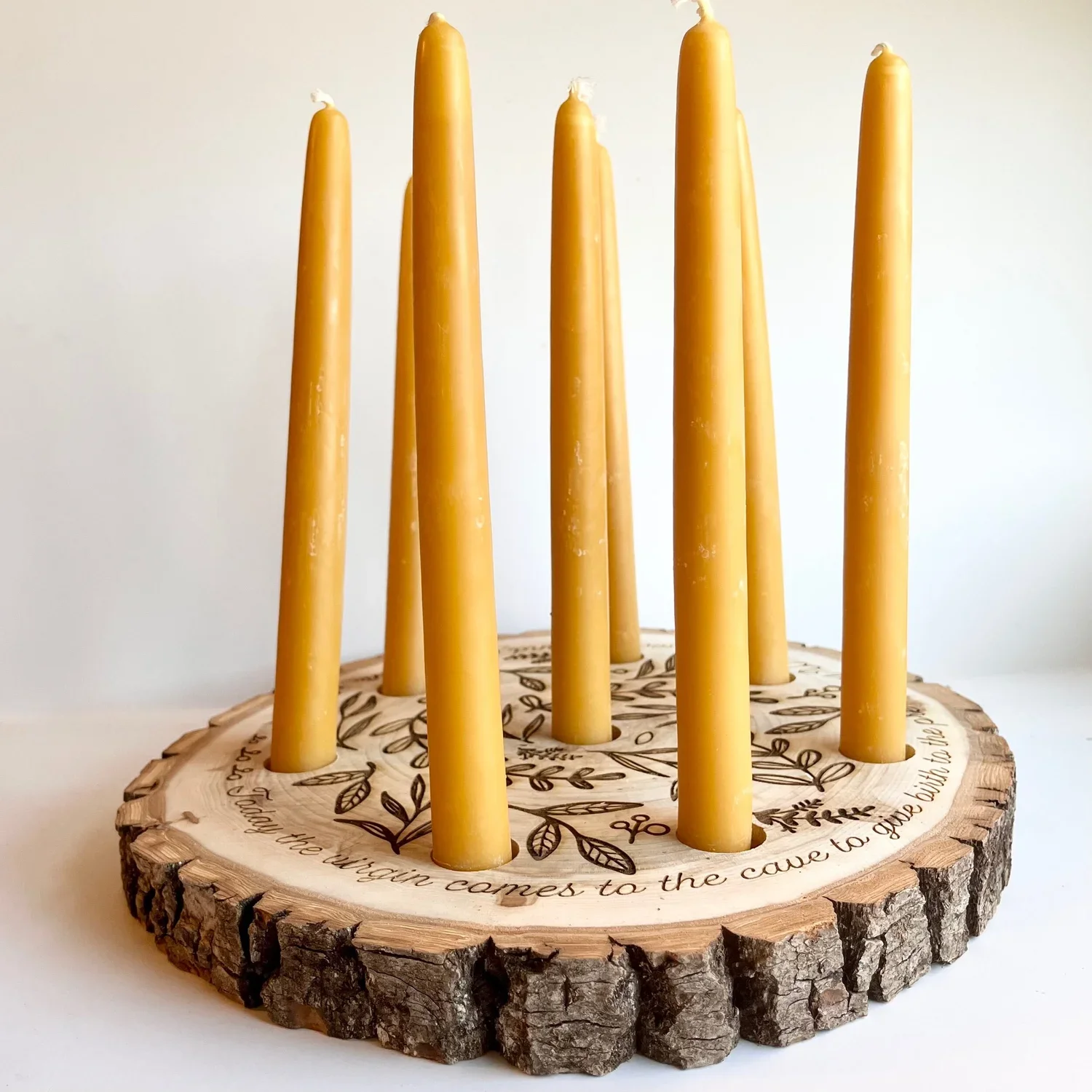


How to use an Advent Wreath:
Light one candle for each Sunday throughout Advent - On the first day of advent (November 15th), light the first candle. From then on, light one additional candle each Sunday, increasing by one each week. Some advents seasons contain only six Sundays, and some only five. If the 7th candle in the circle isn’t needed for a Sunday before Christmas, you can light that one on Christmas Eve. By Christmas Eve, every candle in the circle should be lit, and on the feast of the Nativity of our Lord, you light all of the candles, including the one in the center!
You should use an advent wreath in the way that best suits your family. Some people light the candle(s) every day during evening prayers, or light them and sing a hymn. Others prefer to just light them on Sundays and share the daily Bible readings together. You can also pair the readings from the Jesse Tree, or practice singing the hymn of the Nativity. There is no “right way” to use an Advent Wreath - just find the routine that benefits and blesses your family!
Watch this 1 minute tutorial on Instagram on how we used an Advent Wreath last year


Advent Readings
During the Nativity fast, The Antiochian Archdiocese publishes daily readings for each of the 40 days of the fast and the 12 days of Christmas. These are daily scripture readings that take us from Genesis all the way to the birth of Christ, showing us through the scriptures that all things point to Christ! In addition to the readings, some families create a tree with ornaments to use along side the readings. Here are some readings available:
Jesse Tree Daily Readings (updated link) through the Antiochian Archdiocese
Welcoming the Christ Child Book and Ornaments though Ancient Faith or Draw Near Designs
Jesse Tree Wall Hanging for Advent to pair with Welcoming the Christ Child Ornaments
Advent Wreath in an Orthodox Home Booklet only with weekly readings by Draw Near Designs
Behold a Great Light: A Daily Devotional through Nativity Fast (NEW) from Ancient Faith
Meditations for Advent through Ancient Faith
Free 2026 Nativity Fast Bible Reading Printable by Seeking Theosis


Orthodox Advent Calendar
The marking of time has always been an important part of human existence. For children, this is especially important to help them “mark the time” as we journey through advent. Typical Western advent calendars have 25 days. Because the advent season is longer in Orthodoxy (beginning Nov 15th), you will need a 40 day advent calendar. There are a number of 40 day Advent calendars available now, which has been wonderful to see, or you can choose to create your own! This can be a wonderful way to countdown the days until Nativity with your children.
Fabric Advent Calendar by Draw Near Designs
40 Day Advent Countdown Cards by Draw Near Designs
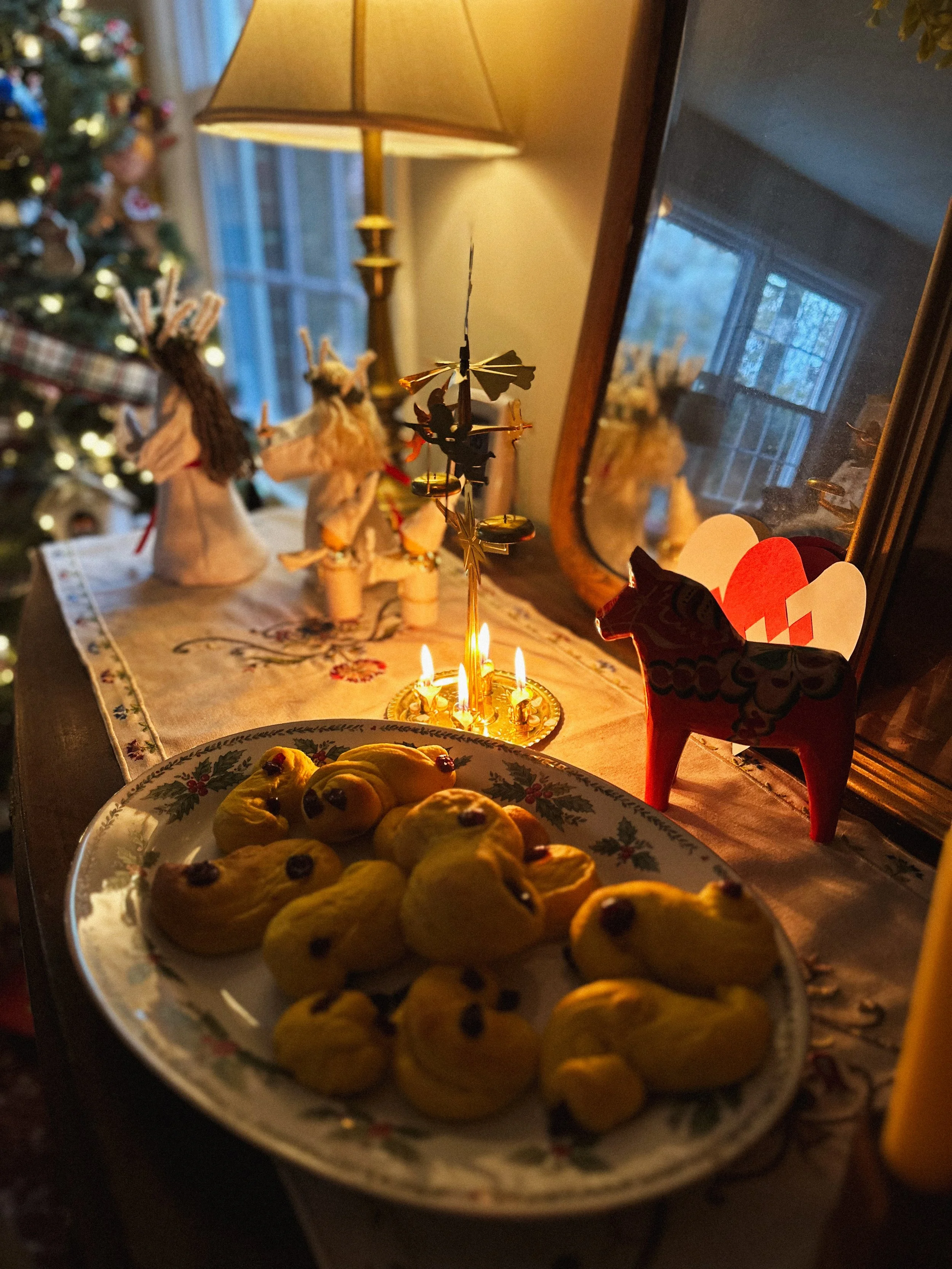
Celebrate the Various Feast Days During the Fast
Celebrating the various feasts during the fast is a wonderful way to create traditions that your family will look forward to year after year! This is also a way to bring the life of the church in our homes. For my family, some of our most dear and favorite traditions happen during Advent:
St Martin of Tours (Nov 12th) - Lantern walk and coat drive. See my Martinmas Blogpost for how to celebrate this feast.
Entrance of the Theotokos (Nov 21st) - Candle lit dinner after Liturgy.
St Barbara (Dec 4) - Make Gingerbread houses.
St Nicholas Day (Dec 6th) - set out shoes the night before and give our presents in secret. See my St Nicholas Guide for how to celebrate this feast.
St Spyridon (Dec 12th) - Make Spyridon cookies! This is the turning point in the fast as we begin to fast more strictly.
St Lucia Day (Dec 13th) - Make lussekatter buns and dress up like St Lucia. See my St Lucia Guide for how to celebrate this feast.
St Herman of Alaska (Dec 13th) - Check out these Spruce Island Cookies for his feast!
Nativity of Our Lord (Dec 25th) - Check out 12 Days of Christmas blogpost on how to celebrate the Nativity and the 12 Days of Christmas.
Check out these fun traditions during the Nativity Fast:


Participating in the Fast
Important elements to any fasting period in the Orthodox Church is (1) Prayer, (2) Fasting, and (3) Almsgiving. Find ways for your family to participate in these three things in order to make this season fruitful and as a means for our salvation. Some ways to do this as a family: Attend services, pray together daily and read the Scriptures, collect food for a homeless shelter, donate warm coats or blankets to those in need, and connect with your local parish for other opportunities to serve the needy around you.
Fasting and prayer go hand in hand. In fact the Scriptures teach us that certain demons can't be cast out except through prayer and fasting. You know who fasts better than we do? The evil one - who does not eat.
As we begin to fast, we must also increase our prayer. Be attentive, and continue to pray daily, increasing our devotion and reliance on the Lord. Attend extra services as we increase our corporate prayers as well.
Make a Plan
This time of year is very busy with all of the cultural things going on that it is easy to get burnt out. Or perhaps you’re like me and start off strong, but 2 weeks in you burn out, having taken on too much. It’s important for us to prepare ahead of time to help ensure we reach out family goals for how we want to spend this advent season. I found this podcast “Preparing for Advent” by Hannah Vasquez of All These Things Podcast very practical and insightful.
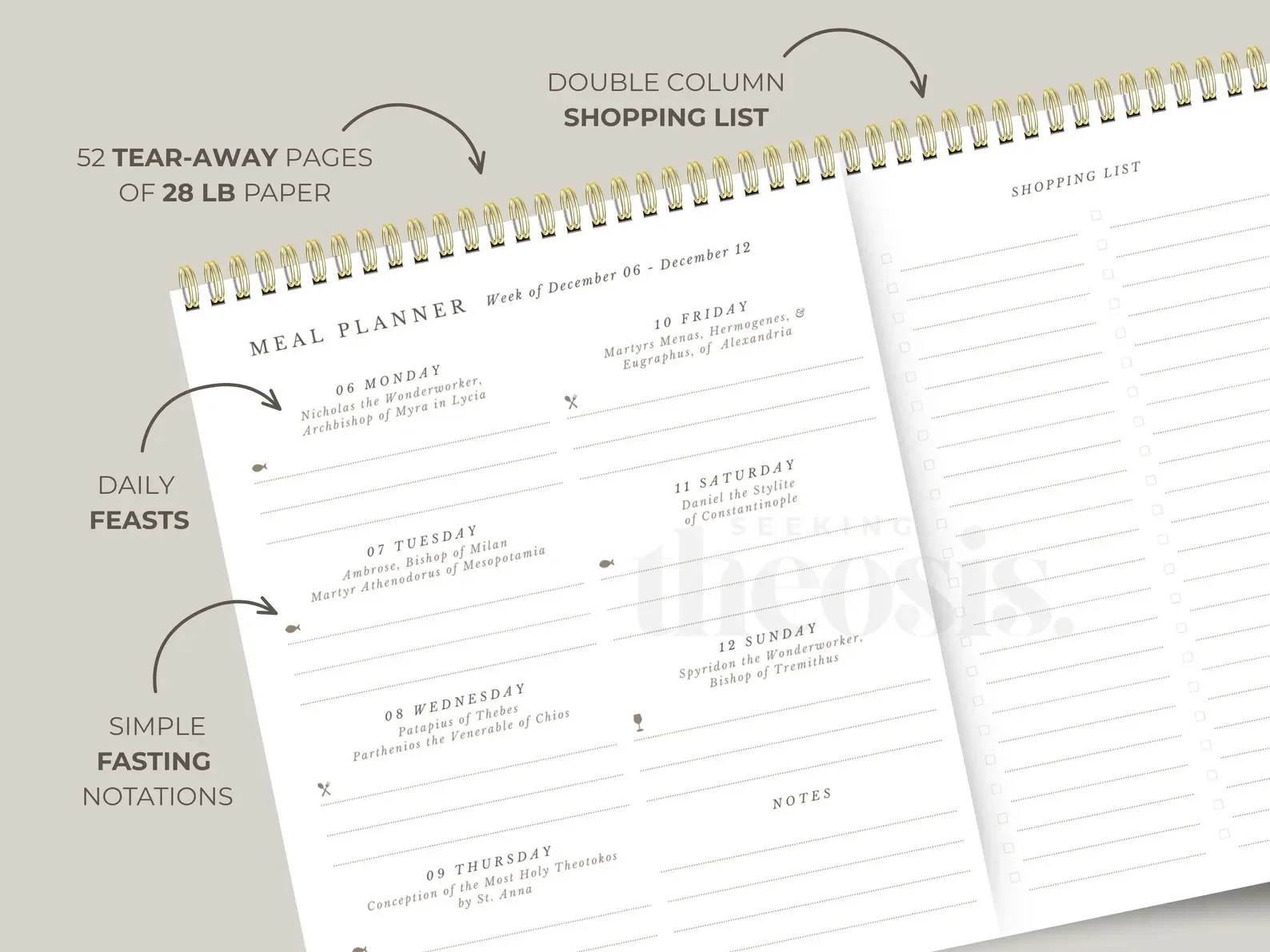
Another fantastic resource for making a plan is the Fast & Feast 2027 Orthodox Christian Meal Planner Notepad by Seeking Theosis
Fasting
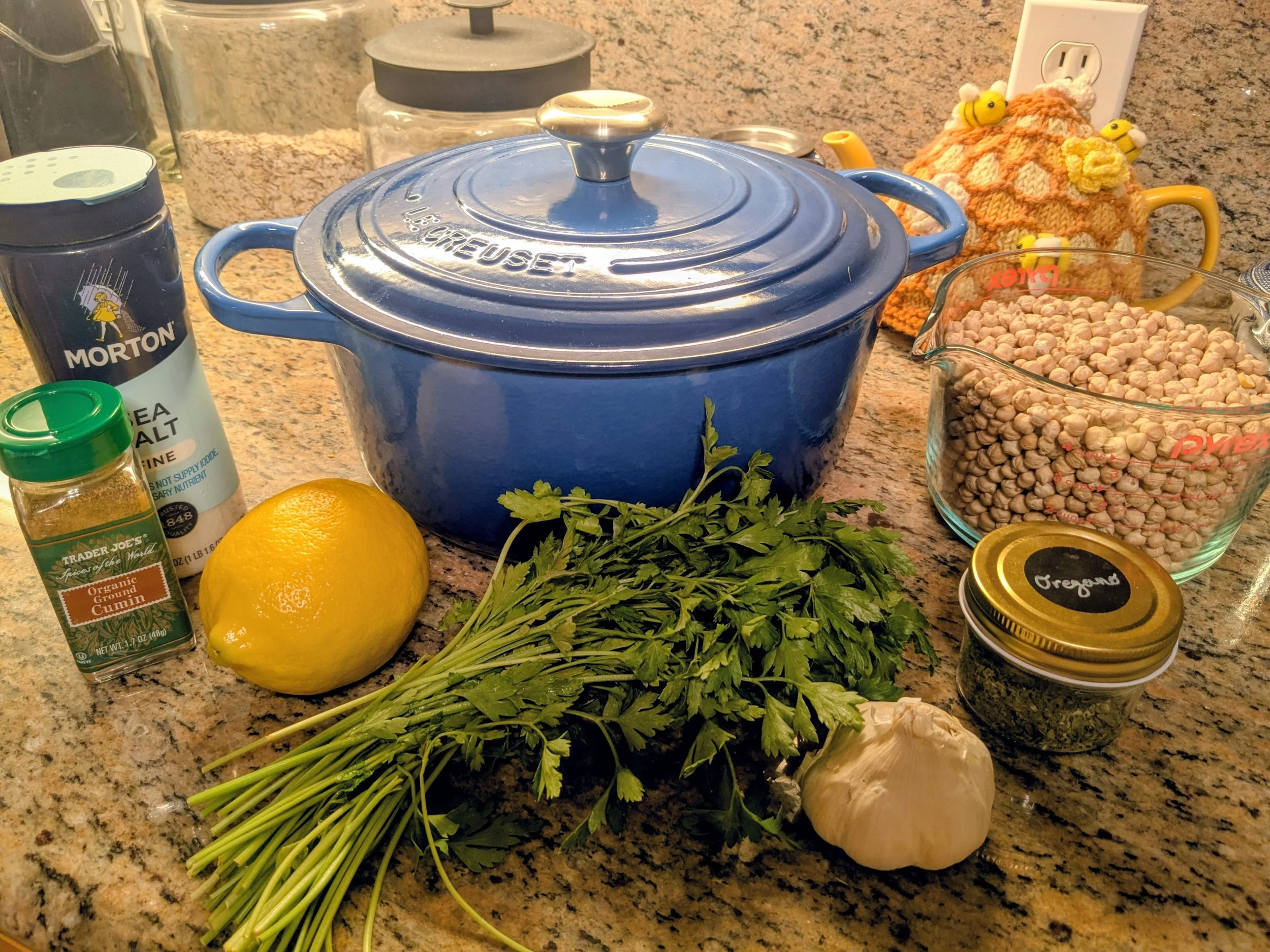
An essential part of every fasting period is the actual fast! As Orthodox Christians, we fast for more than half the year, giving up meat, dairy, eggs, and on strict fast days, giving up oil, wine and fish . By following the prescribed fast of the Church, we are working on our self control, and our hope is by abstaining from foods, we learn to also abstain from sinning. Of course, fasting is a spiritual discipline that should be practiced with the oversight and direction of your spiritual father and priest. You should consult your spiritual father if you have any specific questions about the fasting discipline as it applies to you, and your children. You can read more about the fasting here.
Check out these fasting resources:



….and remember
As with all fasting, please remember that abstaining from food during this period of preparation does us no good if we do not also, as St. John Chrysostom teaches us, fast with:
… the eye and the ear and the feet and the hands and all the members of our bodies.
Let the hands fast, by being free of avarice.
Let the feet fast, by ceasing to run after sin.
Let the eyes fast, by disciplining them not to glare at that which is sinful.
Let the ear fast, by not listening to evil talk and gossip.
Let the mouth fast from foul words and unjust criticism.For what good is it if we abstain from birds and fishes, but bite and devour our brothers?
-St John Chrysostom
Almsgiving
Almsgiving is a special part of this particular fast. Just as the Apostles gave generously of everything they had, we ought to follow their example, offering what we have, and what we have been given to others, increasing our humility and dependence on earthly cares.
Thankfully our culture still embraces this traditional aspect of the nativity season, so there are many opportunities to give to those in need. Every year, we do a big coat drive in honor of St Martin’s day (November 12th) to distribute coats to those in need in our area through the our parish’s various partner organizations. Participate in the almsgiving opportunities your parish is offering or consider other ways you can care for the poor and suffering through volunteering, providing a meal, or even inviting others into your home with hospitality and a warm meal.

Additional Resources for Kids
Activities : For kids activities, I cannot recommend Orthodox Pebbles enough! They have wonderful teaching resources that are easy to do with your kids and have lesson plans attached. On their website there are many free resources. They also have products available for purchase through Draw Near Designs:


Music : for families with kids, we love Gigi Baba Shadid! She is an Orthodox Priest wife and she creates very catchy music for kids to help them learn about our faith. Her CD “Celebrate the Feasts” would be a good one to start with this season since it has a number of songs about Nativity. You can also find her songs on Youtube and Spotify.

The 40 days leading up to the birth of Christ, the Church invites us into a season of preparation: a time of fasting, increased prayer, and almsgiving. The Nativity Fast, also known as Orthodox Advent, is a set-aside time to prepare our hearts to receive the coming Lord. In Her wisdom, the Church knows our weakness and our tendency to become distracted by the cares of this world. She gives us these forty days to intentionally turn our attention back toward Christ. Our souls were created for eternity, and this world is passing away. During the Nativity Fast, we are reorienting our lives toward Christ, not simply making Him the center of our lives, but recognizing Him as our very source of life. Through fasting, prayer, and acts of love, we cultivate a deeper longing for Christ and prepare to welcome Him into our hearts.